
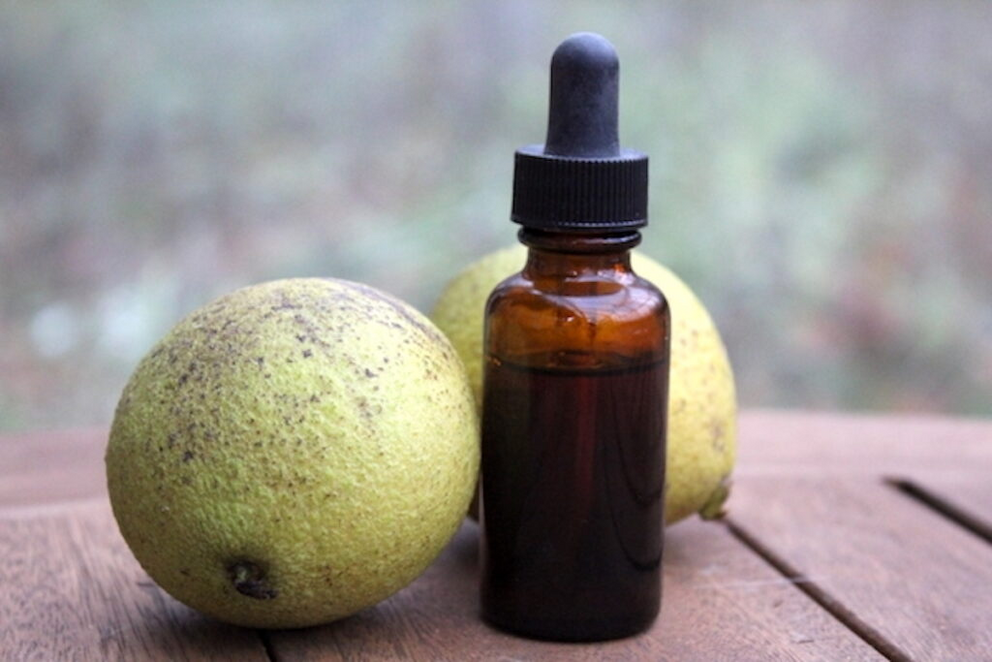
How to make black walnut tincture (and powder)
Black walnut tincture is an astringent, tannic, and cleansing herbal remedy for the digestive system and body. It’s often used to treat fungal, bacterial, and parasitic infections. In herbal tradition, it is also used to treat thyroid disorders. This helpful remedy is easy to make at home and uses the green hulls that would normally be a waste product from black walnuts.
Bitter and astringent, black walnut tincture can help clear the body and digestive system of lingering infections.
Its high levels of tannins contribute to its bitter flavor and probably to its antibacterial, anti-fungal, and anti-parasitic properties. When you’re struggling to fight off an illness, black walnut tincture can provide support.
These stately cold hardy nut trees grow throughout the eastern and central United States. They’re most common in areas of well-drained bottomland with neutral soil, but they’ll tolerate other conditions, too.
Black walnuts are sometimes grown as shade trees, though they’re crop of walnuts can have made them less choice for urban designers than other species. While some value the nuts, others just think of them as a messy nusance dropped each autumn.
The nuts are hard to crack, but not bad if you know the trick to cracking black walnuts. You can also use the unripe green black walnuts in all manner of traditional recipes (from liqueur to jam).
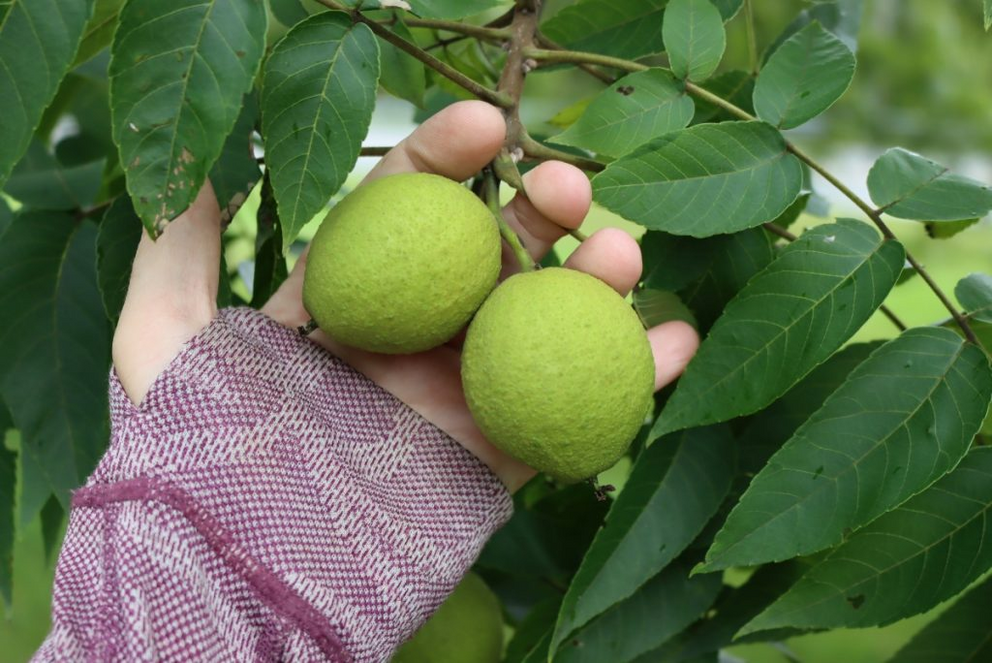
Wild Black walnuts are fairly easy foragers to spot. They have 1 to 2-foot-long pinnately compound bright green leaves and deeply furrowed gray-black bark. Their nuts, which ripen and fall in late summer or autumn, are covered in a green husk that eventually turns brown.
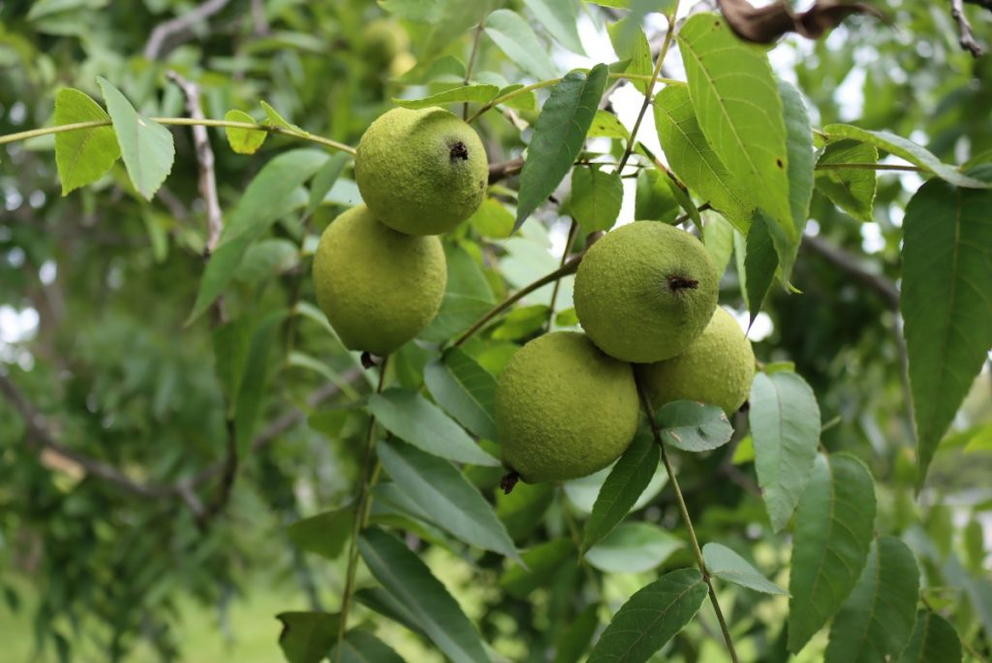
If you’d like to grow one, there’s a lot to love about these native trees. The nuts can be used for food, medicine, and natural dye. They provide shade, sometimes reaching 80 feet tall, and are an important habitat for native wildlife and insects. They also have beautiful dark brown hardwood.
As they’re a native species, you can usually find affordable black walnuts through organizations like the Arbor Day Foundation.
These easy-going trees can be planted nearly anywhere and will tolerate acidic, alkaline, clay, loamy, moist, rich, sandy, well-drained, and wet soils in USDA hardiness zones 4 through 9.
They produce a compound called juglone, which prevents most other plants from growing beneath them and eliminates competition for nutrients and space.
Keep in mind that newly planted trees may take up to 7 years to bear nuts. So, in the meantime, you’ll have to stick to foraging.
Black Walnut Tincture Uses
Herbalists use black walnut tincture both topically and internally to treat a variety of ailments.
Topically, black walnut tincture is used for:
- Treating Fungal Infections
- Treating Bacterial Infections
Internally, black walnut tincture is used to:
- Treat Bacterial Infections
- Treat Fungal Infections
- Treat Diarrhea and Other Digestive Disorders
- Kill Specific Parasites
Additionally, the herb is currently being investigated for its potential:
- Treat Hypothyroidism
In these cases, research is ongoing, and more work is needed to establish whether or not the benefits are scientifically significant.
If you don’t happen to have black walnut trees nearby, or they’re not currently in season, black walnut tincture is available from Starwest Botanicals. They also sell black walnut hull capsules in easy pill form or dried black walnut hull powder for use in topical antifungal remedies (such as salves and creams).
Black Walnuts and Iodine
Not only is black walnut tincture a potent medicine, it’s also one of the few land-based sources of iodine. While you can forage for salt deposits inland or extract salt from plant material when you’re far from ocean salt sources, most inland sources of salt lack iodine. Black walnuts, specifically black walnut husks, are a great source of iodine in a pinch.
I’ve found spotty references suggesting that black walnut hull extracts were applied to those exposed to radiation after the Chernobyl disaster. Supposedly, if you apply the black walnut tincture to the skin, the iodine can be absorbed directly. I’m still looking for a good, reputable source to back up this information.
Other sources say it contains enough iodine to be used as a topical wound anesthetic. Given that black walnut tincture also contains tannins, which are antibacterial, this makes sense even if iodine levels are, in fact, relatively low. Add in the fact that it’s in a suspension of high-proof alcohol, and you’ve got a great recipe for wound sterilization.
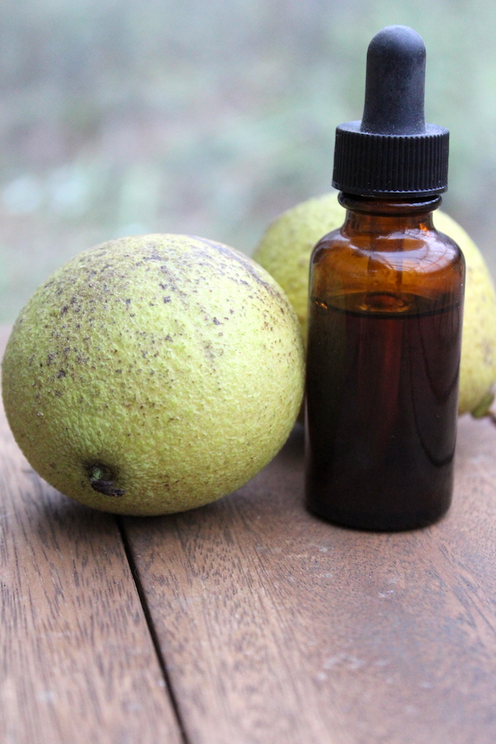
Benefits of Black Walnut Tincture
In traditional medicine, black walnut tincture has been used internally and topically. Native Americans harnessed the healing powers of black walnut to treat goiter, smallpox, sores, hemorrhoids, parasites, and fungal infections like ringworm and athlete’s foot. Colonists adopted the use of black walnut as an antiparasitic.
Herbalists continue to use black walnut in many of these same ways today. Two contemporary herbalists, Phyllis Light, and Matthew Wood, continue to recommend black walnut for the treatment of goiter and hypothyroidism.
Modern research has indicated that black walnut hulls are an incredibly powerful yet safe herbal remedy. The hull extract has shown antibacterial activity against common bacteria like E. coli, B. subtilis, P. aeruginosa, and S. aureus. These bacteria commonly cause UTIs, gastrointestinal infections, staph infections, pneumonia, sepsis, and endocarditis, particularly in immune-compromised patients.
The hulls have also demonstrated antifungal activity against several fungi. One particular fungus it’s effective against is A. terreus, which commonly causes infections in immune-compromised patients and is resistant to amphotericin B, a common antifungal drug. It’s also effective against one of the most common food-contaminating fungi, A. ochraceus, and another fungus. A. brasiliensis, which can cause lung infections.
One of the most common ways herbalists use walnut hulls is to expel worms and other parasites. Unfortunately, little research has been done to verify this usage. However, a few studies have shown that juglone, one of the main active compounds in black walnut, may have some antiparasitic properties.
One 2015 study found that juglone helped induce cell death in Acanthamoeba, a relatively common ameba (single-celled living organism) that can cause rare but severe illness, infecting the eye, brain and spinal cord, or entire body. Another 2020 study found that juglone derivatives were highly effective against Trypanossoma cruzi, a parasitic protozoan that causes Chagas disease (American trypanosomiasis).
Though there is little research to support black walnut’s use in treating goiter and hypothyroidism, there may be a reason behind the anecdotal evidence. Black walnut hulls are high in certain minerals like iodine and magnesium. Iodine deficiency is one of the common causes of hypothyroidism. However, hypothyroidism can also be a symptom of serious diseases like cancer, so it’s best to consult your physician before treating it.
Another component of black walnut hulls, tannins, may play a role in this remedy’s use for digestive issues. Plant tannins are believed to be an effective way to shorten the duration of diarrhea. Tannin-rich plants have also long been used in herbal medicine to treat gastric ulcers and other gastric disorders.
Black walnut tincture is considered fairly safe, but you should still use some caution. Anyone with a nut allergy should avoid using black walnut hull tincture. Prolonged topical or internal use isn’t recommended. Black walnut hulls contain stong compounds like juglone, and their longterm effects are well understood.
Topical use of black walnut hulls may temporarily dye the skin. Some people may also find it irritating, so it’s best to start with a small patch of skin.
Generally, herbalists recommend taking 1 to 2 droppers full of black walnut tincture three times per day and using it topically as needed. However, you should consult with a clinical herbalist for specific dosing instructions, as the dosage varies with the intended use.
For the rest of this article please go to source link below.