
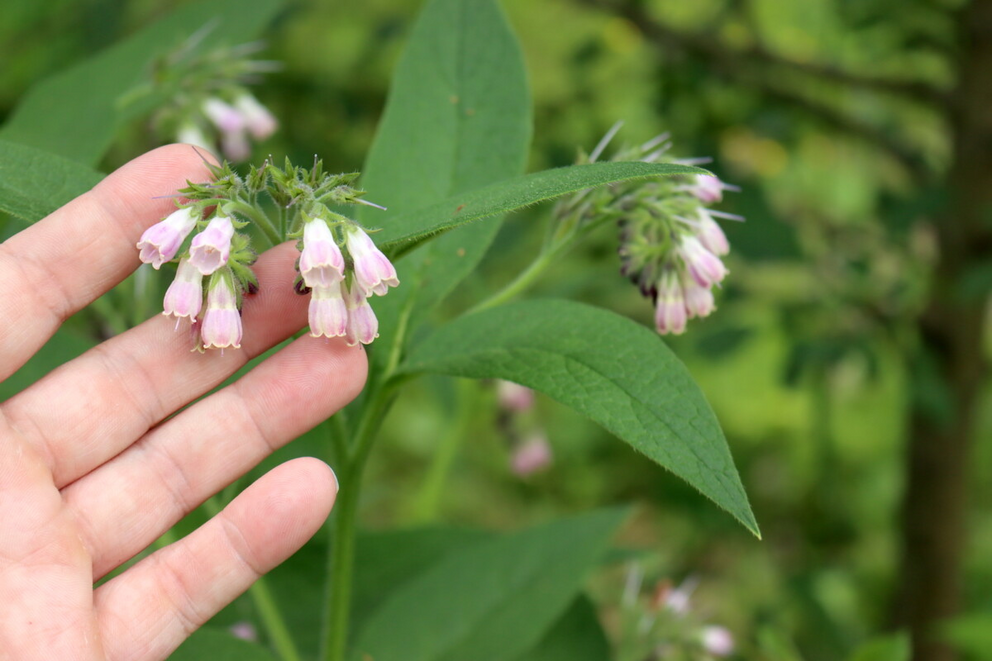
Comfrey: identification, uses and benefits
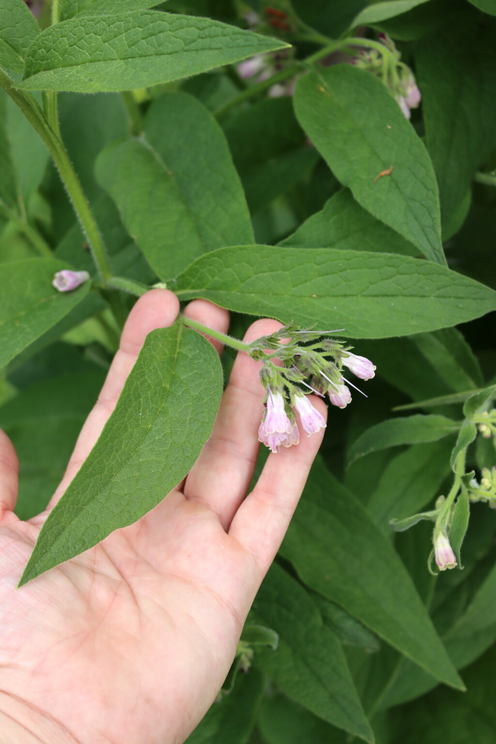
Comfrey (Symphytum sp.) is one of those old-fashioned homestead plants that seems to do a little bit of everything. Herbalists prize it for salves and poultices, gardeners love it for compost and mulch, and once it’s growing in your yard, chances are it’ll be there for good.
I’ve always thought of comfrey as one of those classic homestead plants that earns its keep. Herbalists have used it for generations in salves, poultices, and infused oils for bumps, bruises, sore muscles, and sprains, while gardeners value it as a compost activator, mulch plant, and nutrient accumulator. It’s the kind of herb that bridges old-fashioned home remedies and practical backyard use, and it shows up again and again in any good list of medicinal plants worth knowing.
That said, comfrey is also a plant that needs a little nuance. While it has a long history of internal use in older herbals, modern guidance is much more cautious, and today it’s generally recommended only for external use. In this guide, I’ll walk through how to identify comfrey, where it grows, how it’s traditionally been used, and a few important safety notes to keep in mind before you put it to use.
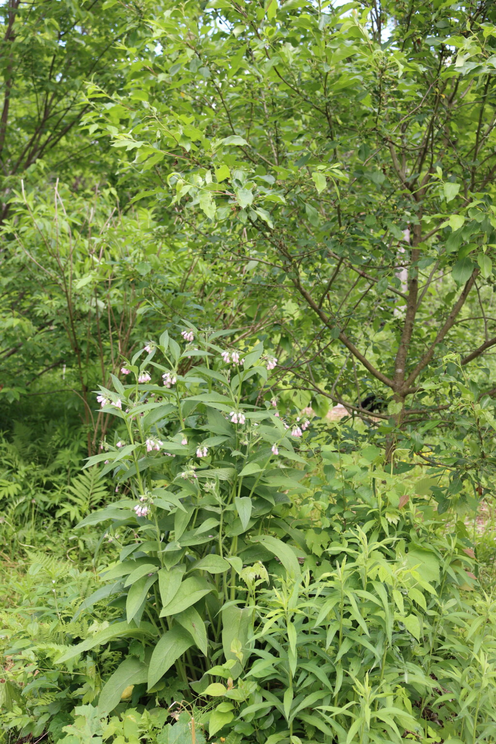 Comfrey in a Fruit Tree Guild on our Vermont Homestead
What is Comfrey?
Comfrey (Symphytum spp.) is a genus of flowering herbaceous perennials in the Borage or Boraginaceae family. The genus includes about 59 different species and some cultivars. You may hear comfrey called other common names, including Knitbone, Boneset, Consound, Slippery-root, Blackwort, or Bruisewort.
Comfrey is native to parts of Europe and Asia but is an aggressive spreader and has naturalized in places outside its native range, including North America. It’s easy to establish in a home garden too, and it sits comfortably alongside other easy to grow medicinal herbs that reward you year after year with minimal fuss.
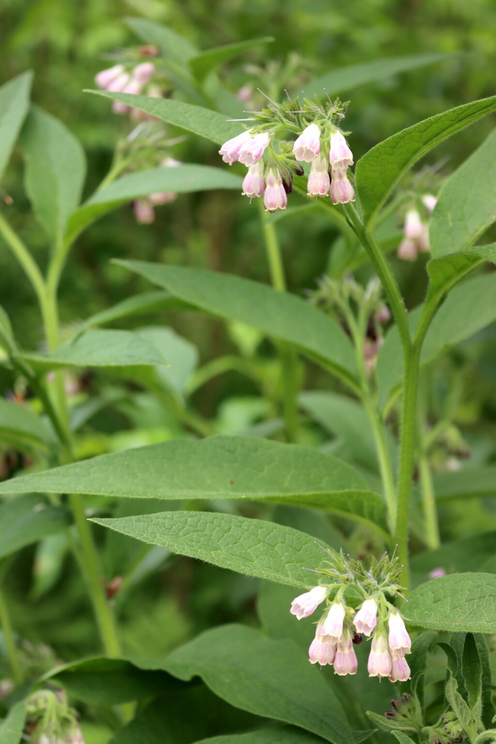
Is Comfrey Edible?
Historically, Comfrey was used in internal herbal preparations and as a green vegetable. It saw exceptionally high use as food during the 1840s Irish Potato Famine.
However, today, we consider comfrey only safe for external use. Comfrey is mildly toxic and contains pyrrolizidine alkaloids that can cause liver toxicity, especially when consumed in large quantities or through repeated doses.
While it isn’t edible for humans, comfrey is an excellent plant for some livestock. You can safely feed comfrey to cattle, chickens, and goats, either fresh or dried.
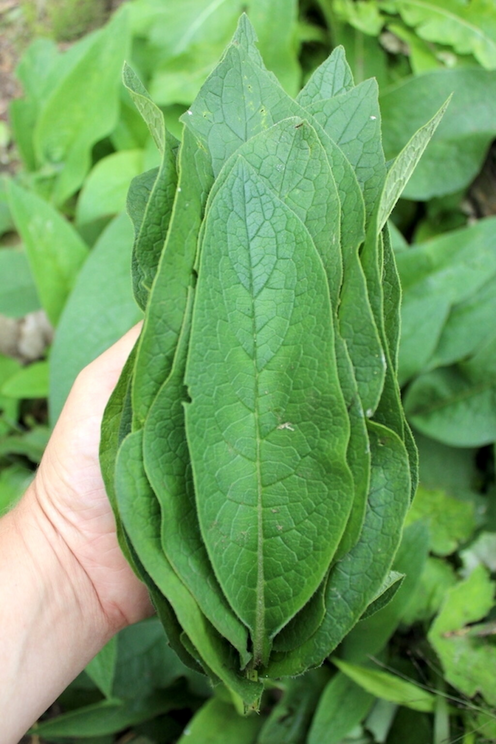 Harvesting Comfrey Leaves
Comfrey Medicinal Benefits
Today, we usually call this plant Comfrey, but in the past, many herbalists would have known it by other tell-tale names like Knitbone, Boneset, or Bruisewort. Herbalists commonly used the leaves in plasters, salves, and casts to help heal fractures, bruises, and sprains. Comfrey’s Latin name Symphytum hints at that historical usage as well. It comes from the Greek symphis, meaning growing together of bones, and phyton, a plant.
Our earliest written record of comfrey is probably from Roman naturalist Pliny the Elder’s (AD 23–79) Naturalis Historia, in which he mentions the plant as good for bruises and sprains. Greek Physician Dioscorides also mentioned Comfrey in his De Materia Medica, written between 50 and 70 CE. He notes many uses for comfrey roots, including “as a compress they also seal fresh wounds.”
Herbalists of the past would also use Comfrey internally, though today, we don’t consider that to be safe. They would use the leaves and roots of comfrey in teas and tinctures to treat osteoarthritis, colitis, diarrhea, gout, ulcers, and stomach problems. The famous English herbalist John Gerard wrote in his 1597 The Herball, Or, Generall Historie of Plantes that “the slimie substance of the roote made in a possett of ale could be used to treat back pains.”
While we no longer recommend using Comfrey internally, modern research has verified many of its topical uses. One trial found that an ointment made with comfrey leaves and flowers reduced the healing time for fresh abrasions by about 2.97 days.
For the rest of this article please go to source link below.