Brilliant-green fireball meteor explodes over erupting volcano in the Philippines
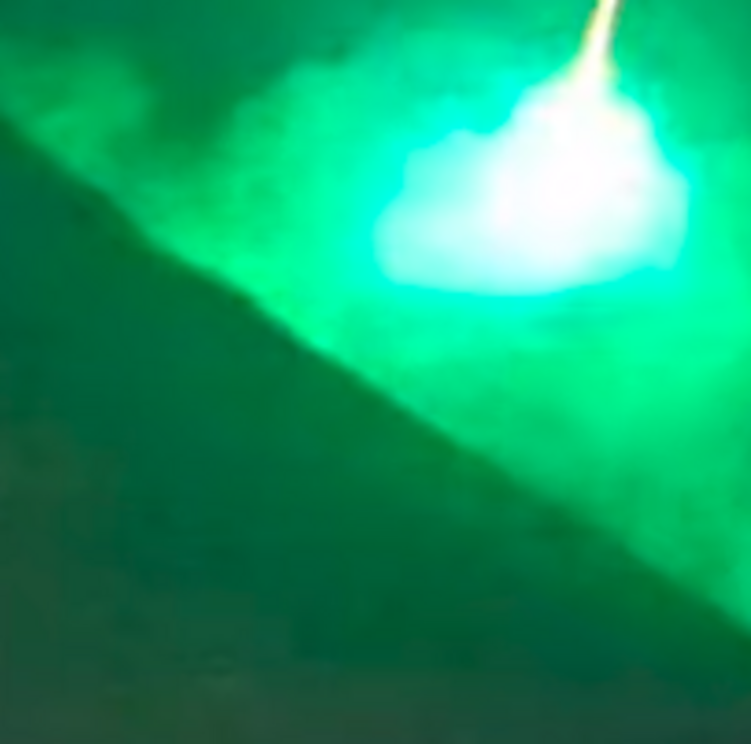
Multiple videos show a rare "fireball" meteor breaking apart with a flash of emerald light over the erupting Mount Mayon. Initial reports suggested that the falling space rock hit the volcano, but this was untrue.
Stunning new footage shows a bright-green "fireball" meteor exploding in the skies over an erupting volcano in the Philippines. Initial reports suggested that the falling space rock may have struck the mountain's fiery slopes — however, experts have confirmed that this did not actually happen.
The "visually striking" fireball was spotted in the skies above Mount Mayon, located within the province of Albay on the island of Luzon in the central Philippines, at 10:33 p.m. local time (10:33 a.m. EDT) Sunday (May 25), according to the Philippine Space Agency.
Two livestreams monitoring Mayon's ongoing eruption captured the bright flash, which lasted just over a second. The volcano, which stands at 8,081 feet (2,463 meters) above sea level, began erupting in early January, according to the Smithsonian Institution's Global Volcanism Program.
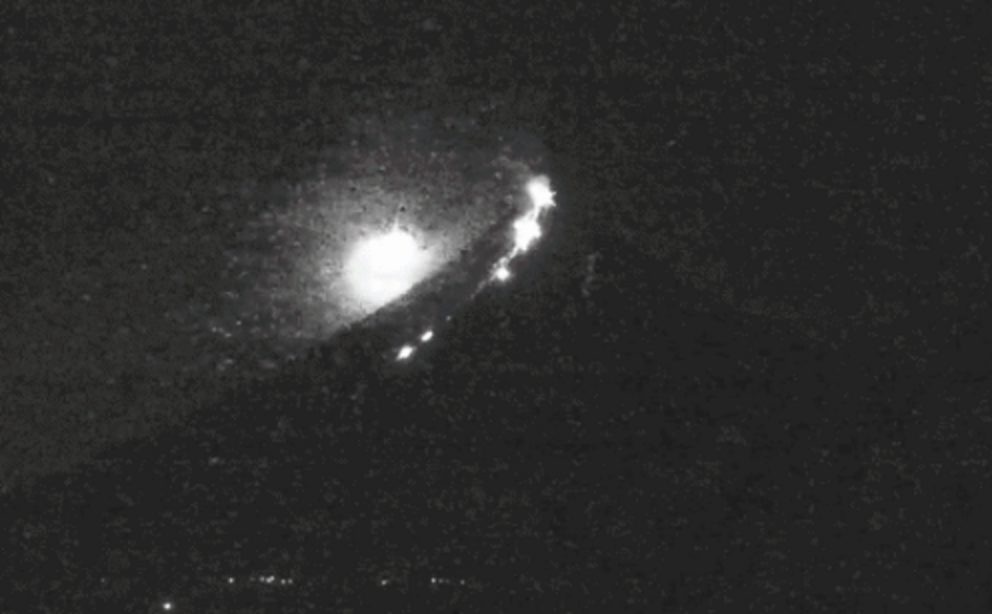
The first video (above), captured by the Philippine Institute of Volcanology and Seismology (PHIVOLCS), shows the event in black and white, with a bright flash occurring near the mountain's summit, which is illuminated by glowing lava.
The second video (below), captured in full color by livestream specialists at afarTV, reveals the red glow of the oozing magma, as well as the emerald light of the streaking meteor. If you watch until the end, you may see a small light rising from near the meteor's trail; this is believed to be the light from a satellite and not related to the meteor, according to afarTV.
Meteor Fireball Plunges Behind Mayon Volcano During Eruption (May 25, 2026) - YouTube
PHIVOLCS representatives initially posted that their footage showed "a meteor striking the [volcano's] northern slopes," which sparked some misleading viral videos on social media.
However, an update to the first post later clarified that "our review of seismic, infrasound and additional camera footage around the volcano indicate that the meteor disintegrated while in the atmosphere and did not strike the slopes of Mayon."
Some estimates suggest that if the meteor had struck Mayon immediately after it lit up, it could have impacted with a force equivalent to 7,500 tons (6,800 metric tons) of dynamite, according to the Philippine Information Agency. If accurate, this likely would have triggered sizable rockfalls that would have been picked up by earthquake sensors around the volcano, experts said.
Even without an impact, the dueling displays of fire in the sky are a remarkable coincidence.
"Fireball" meteors
Fireball meteors occur when asteroids survive reentry into Earth's atmosphere but then burn up due to high friction with the air.
"As [fireballs] plunge through the atmosphere at extreme speeds, friction heats them so intensely that they vaporize," Philippine Space Agency representatives wrote. "This heat also ionizes the air molecules around them, creating the bright, glowing streak we see as 'shooting stars.'" This usually happens between 37 and 62 miles (60 to 100 kilometers) above Earth's surface, they added.
In this case, similar previous observations suggest that the green hue of the fireball was likely due to a high concentration of nickel within the asteroid.
Some larger fragments of these exploding space rocks can survive to reach the ground, becoming meteorites, which can help scientists learn more about the solar system's formation.
On extremely rare occasions, fragments can even strike people's property, as recently happened in Texas, when a cannonball-size fireball fragment smashed through the roof of a Houston home. That impact was one of a series of recent incidents across the U.S., which included a rare daytime fireball that triggered a massive sonic boom over Ohio.