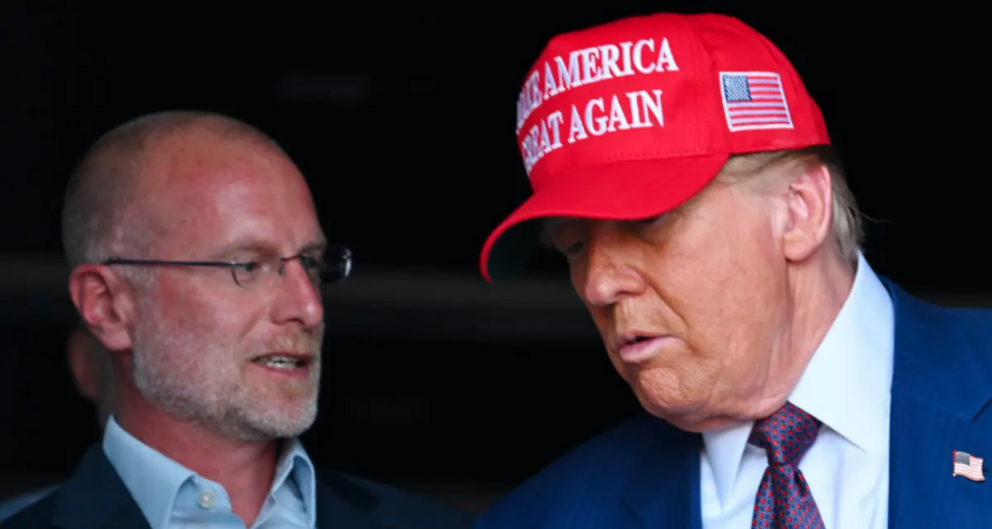
Trump’s FCC seeks to strip even more local control over 5G rollout
Author Derrick Broze
The Federal Communications Commission and the Trump administration have introduced new legislation and a new rule that would further erode local governments’ ability to limit the rollout of 5G small cells.
On December 3rd, the House Energy and Commerce Committee advanced a package of fifteen bills that would reduce the ability of local municipalities to regulate wireless telecommunication technology. The passing of the bills from the committee came only days after the Federal Communication Commission (FCC) published a new rule in the Federal Register that is also aimed at taking away power from local governments when it comes to legislating the rollout of wireless technology.
Critics view both moves as a gift to the wireless telecommunications industry—often derisively called “Big Wireless.”
Of the fifteen bills advanced by the committee, H.R. 2289 is considered the most concerning, according to Environmental Health Sciences (EHS), a nonpartisan, nonprofit news and science organization. EHS warns that H.R. 2289, also known as the Proportional Reviews for Broadband Deployment Act, would grant “sweeping advantages to industry” by rewriting federal law to “override and basically steamroll local authority”.
EHS argues that the bill would force local governments to approve cell towers and wireless modifications or expansions with inadequate review, despite known health, environmental, and safety risks.
The group also notes that the bill would shorten the time frame in which local governments could process cell tower and wireless facility applications by imposing so-called “shot clocks”. For example, if a city or county fails to approve the application within the allocated period, the application would be automatically approved. Additionally, local governments would be restricted from pausing applications—even during extremely busy periods—to conduct a thorough review.
Another concern is the bill’s expansion and reaffirmation of existing rules that prevent local governments from considering the environmental or health effects of radiofrequency (RF) emissions when reviewing cell towers and wireless facilities. This prohibition on considering the impacts of radiofrequency radiation has been standard practice since the passing of the Telecommunications Act of 1996. Specifically, Section 704 of that act bars local authorities from denying permits for cell towers or wireless equipment based on such environmental or health concerns.
Theodora Scarato, Executive Director of the Wireless and EMF Program at Environmental Health Sciences, warned that the bill represents a “historic transfer of decision-making from communities to corporations, with virtually no guardrails”. Scarato also spoke to the problems associated with the 1996 Telecom Act and how these new bills will make a bad situation worse:
“The American people are trapped in a regulatory catch-22: the 1996 Telecom Act prohibits local governments from considering health and environmental effects, federal agencies have cut off funding to study those effects, and the FCC still relies on outdated 1996 exposure limits for RF radiation while ignoring mounting scientific evidence of harm.
How can Congress and federal regulators- the FCC- mandate unlimited wireless expansion while simultaneously blocking communities from raising safety concerns, eliminating local oversight, and defunding the very research needed to protect the public and environment? This regulatory quagmire leaves families exposed, voiceless, and without any meaningful path to protection.”
In November, the US Conference of Mayors issued a letter decrying the package of bills, calling them an “unprecedented federal intrusion into established local decision-making processes” that favor “large broadband, telecommunications, wireless, and cable companies at the expense of residents and taxpayers”.
“These bills strip local governments of the ability to effectively manage the infrastructure built on local streets and in neighborhoods, while imposing no reciprocal obligations on providers.”
The letter was also signed by the National League of Cities, the National Association of Counties, and the National Association of Telecommunications Officers and Advisors.
The FCC Seeks to Rule Over Local Bodies
Environmental advocacy groups are also sounding the alarm about the FCC’s newly proposed rulemaking, published in the Federal Register, describing it as yet another attempt to preempt state and local authority over cell towers and wireless infrastructure.
The FCC’s Notice of Proposed Rulemaking (NPRM), titled Build America: Eliminating Barriers to Wireless Deployments, states that it will advance the Trump administration’s Build America Agenda by “seeking comment on reforms that would free towers and other wireless infrastructure from unlawful regulatory burdens imposed”.
The notice explicitly states that the goal is to expand wireless infrastructure “essential to this nation’s 5G leadership”. The FCC asserts that state and local regulations have resulted in “an effective prohibition of 5G wireless services”. To combat these regulations, the FCC is proposing a new rule to “supercharge the deployment, densification, and upgrading of wireless networks and, where necessary, clarify that state and local restrictions cannot unlawfully block 5G or soon, 6G deployment”.
The FCC also discusses how mobile network operators use artificial intelligence (AI) to manage the performance of their networks and asks for public comment about whether state and local regulations focused on AI are an “effective prohibition on wireless providers’ ability to provide covered service using AI technologies”. The FCC appears interested in preempting or overriding state and local AI regulations as part of their effort to advance 5G and 6G networks.
FCC Commissioner Anna Gomez appears to be wary of the FCC interfering with local regulations on AI. “I want to caution against getting sidetracked by attempts to fulfill a failed congressional effort and second-guess states that are placing guardrails on Artificial Intelligence,” Gomez wrote in her statement. She notes that the FCC’s legal authority in this area is “dubious at best, particularly after recent court decisions limiting our authority”.
The public has until December 31st, 2025, to submit comments to the FCC. Environmental Health Sciences is calling on concerned Americans to submit comments to the FCC in advance of the deadline.
“This is an unprecedented federal power grab. If these rules advance, cell towers could be automatically approved near homes and schools, even when residents, parents, and local officials overwhelmingly object,” Theodora Scarato says of the rule proposal. “Local democracy is not a barrier to deployment, it is the foundation of accountable government. Community voices should never be treated as obstacles to be removed”
Brendan Carr: The Face of the 5G Expansion
When the package of bills passed out of the Communications and Technology Subcommittee of the Energy and Commerce Committee in November, FCC Chairman Brendan Carr applauded the action.
“This package of common sense permitting reforms will help unleash additional broadband infrastructure builds in communities all across the country,” Carr stated.
Carr is a perfect example of a government official working closely with industry and maintaining relationships that clearly present conflicts of interest. Carr is credited with accelerating the 5G rollout during the first Trump administration. Prior to joining the FCC, Carr worked as an attorney at Wiley Rein, where his clients included Verizon, AT&T, Centurylink, and CTIA—The Wireless Association (formerly known as the Cellular Telecommunications and Internet Association).
The Wiley Rein law firm is a hotbed of activity for former government officials and industry regulars. One of its founders, Richard Wiley, is himself a former FCC chairman. According to Open Secrets, in the first four months of 2020 alone, the Wiley Rein law firm was retained by several telecom companies, including AT&T ($80,000), CTIA ($50,000), and Verizon ($30,000). For the past 20+ years, the firm has spent at least $2 million on lobbying for its clients. Open Secrets also shows that CTIA itself spent more than $3 million on their own lobbying efforts.
This revolving door relationship between industry and government was detailed in a 2015 exposé published by investigative journalist Norm Alster for the Harvard Edmund J. Safra Center for Ethics. The report, “Captured Agency: How the Federal Communications Commission is Dominated by the Industries it Presumably Regulates”, documents how the FCC—created in 1934 as an independent agency to regulate interstate communications by radio, television, wire, satellite, and cable—has become a captured agency, with Big Wireless executives cycling in and out of government roles, similar to other federal agencies.
Regarding the passing of the 1996 Telecom Act—the act meant to regulate the developing mobile phone and internet infrastructure—Alster writes,
Late lobbying won the wireless industry enormous concessions from lawmakers, many of them major recipients of industry hard and soft dollar contributions. Congressional staffers who helped lobbyists write the new law did not go unrewarded. Thirteen of fifteen staffers later became lobbyists themselves.”
As part of my investigations into the dangers posed by wireless technology and 5G networks, I have had direct experience dealing with Carr. On September 30, 2019, Commissioner Carr and other FCC officials were in Houston to discuss the future of 5G. I interviewed Carr about the concerns regarding his connections with the wireless industry, as well as the implications of the “Captured Agency” report. Unfortunately, Mr Carr had no interest in addressing these concerns. He refused to answer my questions and only stated, “We’re excited about the 5G build out and working with local leaders.”
The following day I was able to question Carr for a second time while walking the streets of downtown Houston and once again he avoided my questions.
In 2023, after posting about my exchange with Carr, the FCC Commissioner responded to accusations that he answered my questions like a robot with “beep. bop. booop.”
Ultimately, Carr is simply following orders from President Donald Trump, both during his first term and now in his second administration. In October 2018, Trump signed a presidential memorandum directing the Commerce Department to develop a “national spectrum strategy” to prepare for the introduction of 5G wireless networks. It should also be noted that Carr contributed to the Heritage Foundation’s infamous Project 2025, writing the chapter on the FCC. Project 2025 is a massive report containing proposals by the Heritage Foundation to reshape the US government to reflect their particular brand of conservatism. While Trump has sought to distance himself from Project 2025, he appointed Russ Vought—a key architect of Project 2025—as director of the Office of Management and Budget (OMB), a position which he has served in since February 2025.
This announcement was followed by another in April 2019, when Trump announced the expansion of 5G network deployment. Trump made the announcement while standing with then-head of the FCC Ajit Pai. Mr. Pai is now the president of the CTIA—yet another example of the revolving door between government and industry.
The Last American Vagabond will continue to follow the developments regarding HR 2289 and the FCC’s rulemaking proposal.
For more background on my fight to expose the dangers posed by radiofrequency radiation and 5g, watch my 2020 documentary The 5G Trojan Horse:
For the rest of this article please go to source link below.
Video can be accessed at source link below.