
China’s new dealings with Iran and adoption of resistance rhetoric
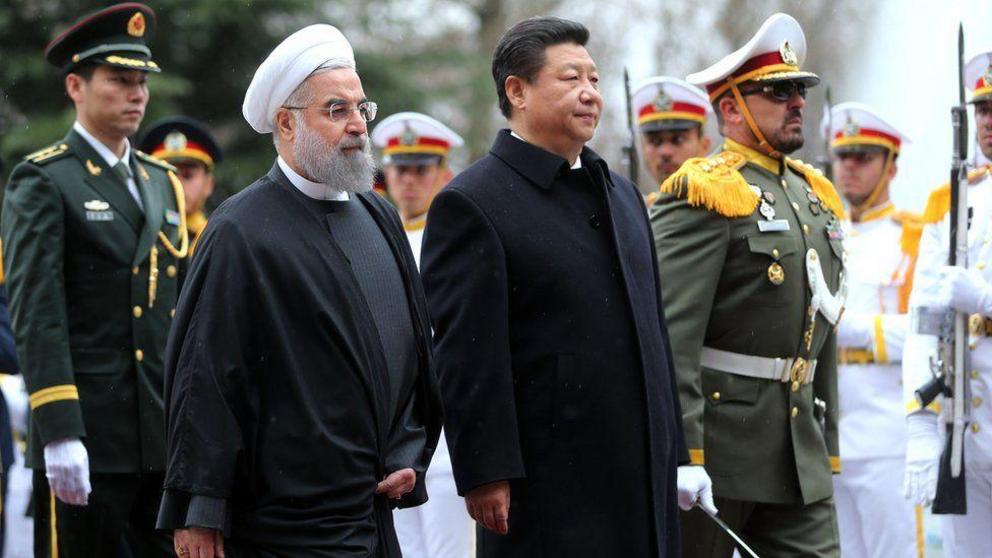
China’s Minister of National Defence, Wei Fenghe, visited Tehran this past Wednesday, in what looked like a step closer to further military cooperation between China and Iran. What does China’s new international posturing show us about its coming role as an emerging super power?
Iranian President Ebrahim Raisi has stressed his intent to tighten ties, including military coordination, between the Islamic Republic and Beijing. In 2021, China and Iran had entered a strategic 25-year agreement designed to enhance ties between the two nations, specifically when it comes to Iran’s resources and its infrastructure. The agreement, said to be worth 400 billion dollars, rattled not only the US Government’s feathers, but Washington’s allies too.
A further strengthening of ties between Iran and China is a dangerous prospect for US hegemony in the Middle East. For Beijing, they will potentially have a growing say in all of Iran’s spheres of influence, and the direction that the Chinese Government is going, with its rhetoric, has come as a surprise to many analysts.
The United States Government threatened military action last week, in the event that Beijing’s newly announced defense pact with the Solomon Islands will mean Chinese military bases being built inside the nation. Australia has again lashed out at China, as part of its anti-Beijing hate fest, with its Prime Minister, Scott Morrison, claiming that it was particularly wrong for the Solomon Islands to have negotiated its China deal in secrecy. Solomon Island’s PM, Manasseh Sogavare, then accused Australia of hypocrisy, stating that regional nations “should have been consulted to ensure that this Aukus treaty is transparent since it will affect the Pacific family by allowing nuclear submarines in Pacific waters”.
Tensions over China’s security agreement with the Solomon Islands are just the latest in a long line of escalatory steps taken by the West and China. Australia is currently being used as the pawn of the United States and United Kingdom, yet are suffering greatly for their decision to mess with China, the country which has the potential to crush Canberra economically. In response to the aggressive Australian anti-Chinese propaganda campaign, Beijing has dubbed Australia as the “white trash of Asia”.
The strategic Chinese shift is however spanning much further. For the past few years Beijing has been urging nations like Saudi Arabia and others to battle for their national sovereignty, attempting to pull traditional US allies into their camp. Israel, which is currently being pulled further into NATO’s orbit and away from China, at Washington’s demand, seems to be facing the beginning of a Chinese backlash. Whilst Israeli occupation forces attacked Palestinian worshippers during Ramadan at the Al-Aqsa Mosque compound, China took a clear stance against this. Beijing’s representatives have also chosen to use language lately, which indicates Palestinians have the right to acquire their human rights by any means necessary under international law. A further military alliance with Iran, Tel Aviv’s greatest threat, also asserts China’s dominance and gives them leverage over the Israelis.
China also accused NATO of messing up Europe, following rash statements from UK foreign secretary, Liz Truss, who seemed to be speaking down to Beijing and telling China to “play by the rules”. In real time, China, which has been catapulted into global dominance alongside its US rival — in the wake of the Ukraine conflict — seems to be gearing up to defeat the West in the ‘New Cold War’. Some have even noticed that China is starting to use rhetoric, which could be compared with the way the Soviet Union used to deal with nations seen as belonging to the ‘Global South’.
Whilst the Western nations are gearing up for further confrontation with China, Beijing is taking its time to strategically position itself to take on all emerging threats and put weaker nations like the UK and Australia in their place in the process.
China’s alignment with Iran will be key to designing a completely new order in the Middle East. Tehran’s influence spans through Iraq, Lebanon, Yemen, and Palestine, backing the most powerful militant groups there. In Syria, Iran’s alignment with President Bashar al-Assad makes it a regional powerhouse. China has been making strides towards developing relationships with Iraq, Lebanon, and Syria, offering the possibility of investment in the near future, however, this is yet to materialize. Beijing’s ability to develop strong ties with Middle Eastern nations, from Tehran to its rival Saudi Arabia, will set the stage for a new era of Chinese dominance. This dominance is not to be directly correlated with US dominance, normally carrying colonialist undertones, but instead it is more likely that the Chinese will simply exert control economically, rather than with any direct military force — for now.