
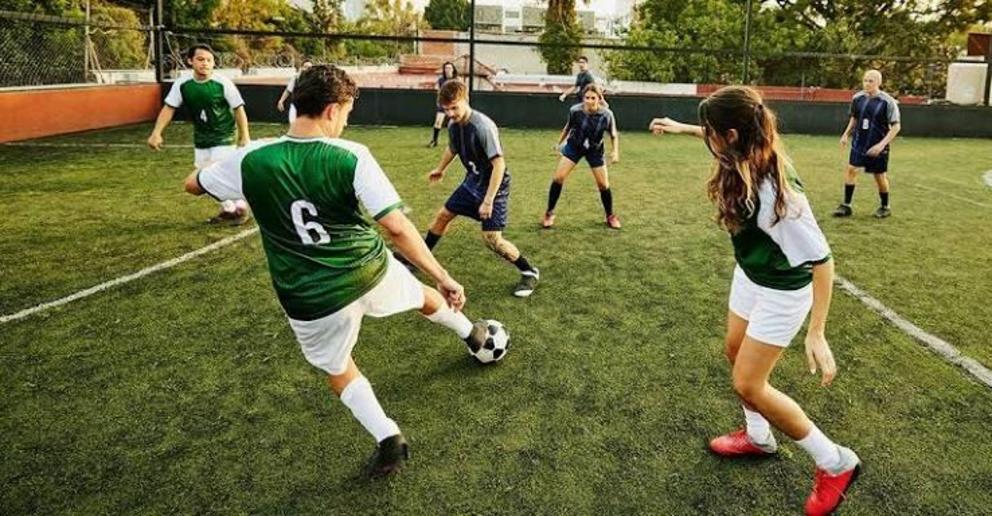
You don’t have to be a soccer pro to reap the health benefits
Beyond improving physical fitness, soccer offers several physical and mental health benefits, regardless of your age or experience level.
Soccer, known around the world as football, is the most widely played sport globally, with an estimated half a billion active participants. And while soccer has had to battle for attention with more popular sports in the United States, it’s still one of the country’s fastest-growing sports, especially among young people.
In the wake of the 2026 World Cup coming to the United States, many more people may develop an interest in “the beautiful game.” They can find encouragement in the knowledge that soccer offers numerous physical and mental health benefits. Here are a few of the reasons you may want to consider joining that recreational soccer team.
Soccer boosts heart health
Soccer involves constant running with periodic sprints. These translate to two specific exercise types that benefit cardiovascular health:
- Aerobic endurance (cardio): Soccer involves continuous movement, which raises your heart rate for extended periods. This helps boost cardiovascular fitness, meaning your heart functions more effectively.
- High intensity interval training (HIIT): Periodic explosive bursts of activity require increased blood flow. This repetition helps remodel your blood vessels, making them more flexible and improving function.
Specific cardiovascular benefits associated with soccer playing include:
- lower blood pressure
- reduced LDL (“bad”) cholesterol levels
- improved VO2 max (how much oxygen you can take in)
- reduced risk of heart disease and stroke
Is soccer good exercise?
Yes! Soccer provides a hat-trick of exercise types, combining aerobic (cardio), resistance (strength), and high intensity interval training. Experts consider even casual soccer playing to be a form of vigorous physical activity.
Scientists measureTrusted Source the energy you expend performing a task in metabolic equivalents of task (METs). Sitting on a chair is equivalent to 1 MET. Moderate physical activity starts at about 3 METs, while vigorous activity is 6 METs or more.
Researchers estimate that casual soccer is equivalent to about 7 METs, and competitive soccer about 9.5 METs.
The Physical Activity Guidelines for AmericansTrusted Source recommend at least 150 minutes of moderate-intensity exercise or 75 minutes of vigorous-intensity exercise per week. They also recommend at least 2 days of strength training exercises. Soccer also counts as excellent strength training.
Soccer alters body composition
Studies involving both adults and children have demonstrated that soccer improves body composition, reducing body fat and enhancing muscle tone. Researchers observed significant changes in just 12 to 16 weeks, even with casual, recreational play. The effect is even stronger for people with overweight or obesity.
While toning can be helpful for general fitness, these effects also have significant health benefits. Excess body fat, particularly visceral fat, can increase your risk of numerous health conditions. Visceral fat is the fat that surrounds your vital organs, compressing them and contributing to increased inflammation.
Soccer helps develop stronger bones
Soccer involves many quick starts, stops, jumps, and direction changes. These actions place stress on your bones, signaling them to grow stronger. ResearchTrusted Source suggests that playing soccer can improve bone mineral content and density.
While this effect is particularly beneficial for young soccer playersTrusted Source, some studies have found similar effects for middle-aged and older adults, even those with no previous soccer experience.
Soccer helps build muscle strength
In addition to cardio and HIIT, soccer can be an effective form of strength training.
The actions that aid bone development also help muscle growth, particularly in the core and lower body. Muscle groups that see the most benefit from soccer playing include:
- quadriceps
- hamstrings
- glutes (butt muscles)
- calves
- abdominals
The upper-body movements involved in sprinting, jumping, and throw-ins during soccer can also help build upper-body strength, making the sport an effective full-body workout.
Soccer can provide mental health benefits
This is one area where not being a pro gives you the edge. Research is mixed, but some studies show that elite soccer players (especially females) may be more prone to mental health problems, like anxiety and depression.
But for casual soccer players, research suggests that soccer offers mental health benefits. Exercise, like soccer, triggers the release of mood-boosting endorphins in your brain.
Playing on a team can also improve your mental health. A 2019 study found that people who participated in team sports were less likely to report anxiety or depression than participants in individual sports. And a 2020 study found that soccer helped reduce stress in alienated youth.
Soccer may improve brain function
Once again, amateur soccer players may have the advantage here. While medical professionals are increasingly concerned about the long-term effects of frequent headers in elite soccer players, research suggests that amateur players may display improved brain function.
Soccer players need to process a lot of information on the field. This sustained focus helps sharpen concentration and improve rapid decision making. Studies involving children suggest that soccer can improve attention, working memory, and inhibitory control (the ability to stop automatic urges).
Did you know?
Brain mapping studies suggest that soccer may strengthen certain neural pathways, particularly for visual and spatial processing.
Some research also suggests that exercise plays a role in strengthening neural pathways.
How to get involved in soccer
Part of why soccer is the world’s most popular sport is because of how easy it is to get started. You don’t need much equipment, other than a ball. Many towns have a soccer field with nets, but you can start a game on any surface (indoor or outdoor) and fashion nets out of available items.
What’s really key is finding others to play with. You can:
- Look up local recreational leagues tailored to beginners.
- Invite friends, colleagues, or family members to start pick-up games.
- Look for intramural offerings on campus if you’re a student.
If you join a league, you may need to buy a pair of cleats to play on outdoor turf. Some people also like to wear shin guards to protect themselves from incoming kicks.
Always warm up before you play. Spend at least 10 minutes on dynamic stretches, like:
Soccer for beginners
If you want to pick up soccer but have a history of little to no exercise, it may be best to take some preparatory steps first. Jumping into vigorous exercise too quickly, especially for people 30 years and older, can lead to ACL tears and other tendon ruptures.
Try working your way up to running for long periods and incorporating a good flexibility program.
Takeaway
Soccer’s combination of aerobic, strength, and high intensity interval training can help boost physical fitness, mental well-being, and even cognitive function. Regular participation can help reduce the risk of serious health conditions and help you build social connections.
So, if you’ve seen the pros on TV during the World Cup and thought, “That looks fun!” know that it can help you on your health journey, too. So, why not give it a try? No prior experience necessary.