
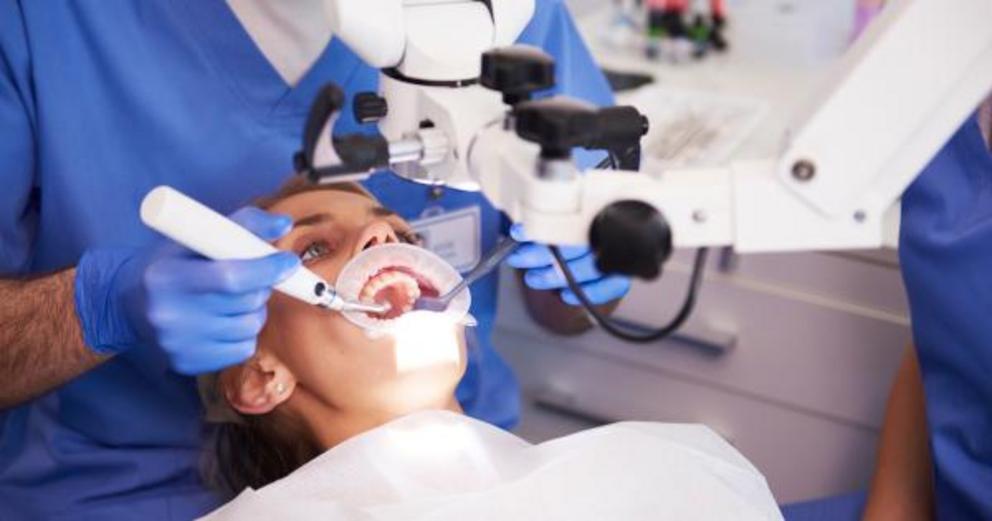
More fillings, more fatalities: amalgam exposure tied to stillbirth or newborn deaths
Written By: GreenMedInfo Research Group
An alarming new study links pregnant women's mercury exposure from dental fillings to increased risk of stillbirth or newborn death
A concerning new study in PLOS ONE journal reports that pregnant women's exposure to mercury-containing amalgam dental fillings correlates to elevated risk of perinatal mortality, encompassing stillbirth and newborn death within the first week.1 Women with more amalgam fillings had steadily higher rates of their babies tragically dying in the perinatal period. Although dental amalgam emits mercury vapor that crosses the placenta to the fetus,2 policies lag behind scientific evidence on avoiding this neurotoxin, especially protecting pregnant women and children.3 Nonetheless, natural healing advocates can educate on amalgam's risks, supporting healthy pregnancies and natural birthing.
This research utilized prospective data from over 70,000 pregnant women in the Norwegian Mother and Child Cohort Study from 1999-2008. Participants self-reported the number of teeth with amalgam fillings, and subsequent perinatal deaths were tracked via Norway's Medical Birth Registry.1 As amalgam exposure increased stepwise from none to 13+ fillings, so did the occurrence of perinatal mortality, rising over threefold from 0.20% to 0.67%1. Regression analysis uncovered a linear relationship, with risk of perinatal death growing steadily by 4.1% for every additional amalgam tooth.1 This dose-response bolsters the case for amalgam causally increasing said risk.
Adjusting for other variables like smoking and alcohol intake did little to alter the association between amalgam and perinatal loss. In the highest exposure bracket of 13+ fillings, women's adjusted odds of experiencing the devastating outcome were 2.34 times controls,1 representative of a 134% increase. If this link proves to be causal, the study's author computes that over half the incidences among the highest exposed would be attributable to amalgam.1
The results align with previous research where pregnant dentists and hygienists exposed occupationally to mercury faced increased fetal and neonatal mortality compared to the general populace.4-6 While such studies cannot disentangle work-related amalgam exposure from other hazards like anaesthetic gases, they preview the reproductive toxicity of mercury. Growing evidence confirms dental amalgam continuously releases mercury vapor that gets inhaled and absorbed into the bloodstream, accumulating in bodily tissues like the placenta along with other dominant sources like certain fish.7-11 Inorganic mercury can thereby traverse to the fetus, incentivizing minimized exposure per the precautionary principle.3
Though research on prenatal amalgam exposure has produced conflicting results on physical growth outcomes like birth weight.12,13 this study signals potential harm for more catastrophic infant outcomes like mortality. Strengths enhancing confidence in the validity of the findings include the large sample size, prospective methodology limiting biases like recall error, assessment of a biological gradient, and controlling for likely confounding factors.1
However, the study is not devoid of limitations.1 The occurrence of perinatal death was low at only 0.3%, generating relatively few cases for analysis. Self-reported dental filling counts may inaccurately measure actual mercury exposure. Participating mothers smoked less and had fewer stillbirths versus the Norwegian average, limiting generalizability and indicating the results may underestimate amalgam's true impact.1 Nonetheless, the authors argue associations remain externally valid1, and their calculations likely downplay the number of perinatal deaths attributable to amalgam due to imprecisely capturing mercury exposure.
While research should continue interrogating dental amalgam's reproductive toxicity, avoiding mercury aligns with natural approaches to foster healthy pregnancies and births. Implementing biocompatible materials like composite resin instead of amalgam protects mothers and children from added heavy metal burden.9 Eating lower mercury seafood and emphasizing detoxifying foods like cilantro, selenium-rich Brazil nuts, and sulfur-containing garlic also helps mitigate exposure.3 Boosting your oral microbiome balance with probiotic supplements could additionally inhibit mercury absorption from existing fillings.14 Such supportive strategies buffer against environmental stressors that might derail natural physiological processes like bonding, birth, and breastfeeding.
Until policies definitively restrict all non-essential mercury uses, individuals can take sensible precautions against amalgam exposure based on accruing evidence of its reproductive harm. Protecting developing life's fragile beginnings necessitates nurturing mothers' wellbeing and minimizing toxic exposures like mercury. Promoting such precautionary and preventative paradigm shifts aligns with principles of natural medicine and ancestral living.
© February 16th 2024 GreenMedInfo LLC. This work is reproduced and distributed with the permission of GreenMedInfo LLC. Want to learn more from GreenMedInfo? Sign up for the newsletter here www.greenmedinfo.com/greenmed/newsletter.
For full references please use source link below.