
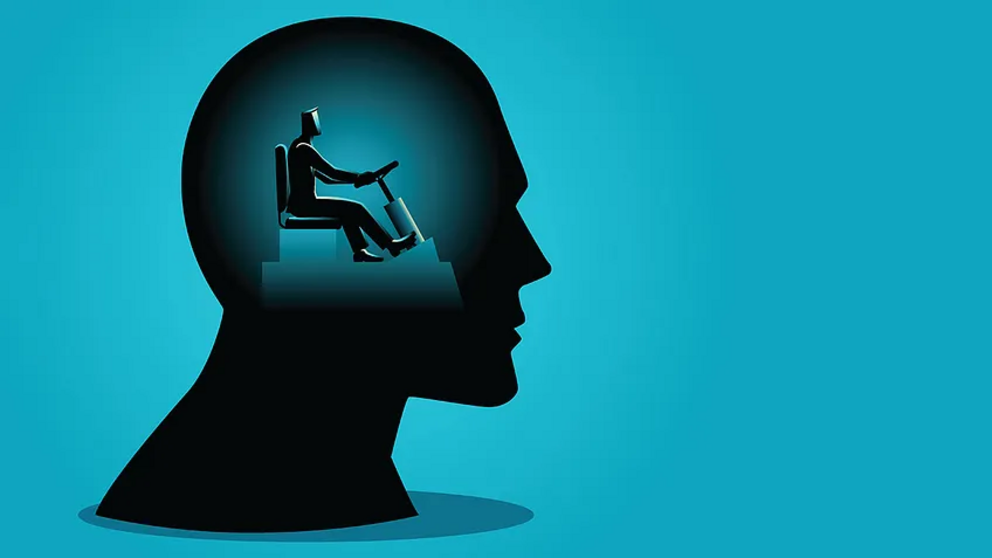
Free will or agency: what drives our behavior?
Exploring where our actions and decisions arise from.
In the area of philosophy, and now neuroscience, the question of free will has been a hotly debated topic for a long time.
Neuroscientists like David Eagleman, who has hosted specials on the Brain for PBS, are now of the opinion that the brain works on the basis of neural networks. Eagleman maintains that these networks may sometimes even compete for which “decides” on the action.
He goes as far as to speculate that the visual areas of the brain, which are presumably “off” during sleep, actually remain active to remain “relevant” during sleep which results in dreams. The suggestion is that they do not want to cede their participation as part of the networks by shutting them down.
That’s an interesting theory because of course dreams are themselves a rich area of speculation in which many believe one may be accessing other dimensions or realities unavailable when awake.
In modern spiritual circles and among many philosophers who stress the wholeness of Everything or the concepts of nonduality, free will is, of course, a nonstarter.
Why Free Will is Doubted
It would require a separate person to exercise free will and if there is only ONE, then there are no separate persons.
Wayne Liquorman, one such nondual proponent says, “If you have free will, use it.” I’ve taken that as a challenge occasionally to use the present moment to motivate myself to do something I was resisting.
The problem is that after the event, upon further reflection, one can recognize that any one of a number of external and internal factors preceded and may have had a causal effect on what you think you “did.”
Some suggest that if you accept the notion of cause and effect that it all goes back to the Big Bang.
And as one is analyzing such an experience, it becomes clear that every one of our explanations is simply a story, constructed presumably by the same brain that we are attempting to analyze.
This brings us back to the “Hard Problem of Consciousness” that I wrote about recently; who is there to actually explain consciousness after all is said and done. In a world of General Relativity, who is the impartial outside arbiter of “who” did “what”?
Beliefs Are Accumulated
When we examine who we think we are, if we are honest, we find that we are a collection of conditioned beliefs sometimes called the Ego. But if one looks deeply, no such single entity is anywhere to be found. All we ever really get to is Awareness of any thought, feeling, sensation or belief.
So What About Personal Responsibility? A big problem for society as neuroscience probes the brain and finds “committees” of neurons rather than a sole “human” identity anywhere – is who is responsible for actions?
With the preponderance of mental illness across North America, due to the stresses of what has become a toxic society, at what point will PTSD be viewed the same way as temporary insanity?
So that someone with a plethora of stresses and documented trauma could plead temporary insanity if they lashed out and killed someone?
Of course, addressing the causes of PTSD might then result, and turn out to be a boon for society in the long run if a recognition of the true cost of stress might lead to actual significant investments in medical health in general and mental health in particular.
I mentioned Dr. Gabor Mate, author of “The Myth of Normal” in a previous article about trauma, which is Dr. Mate’s specialty.
Dr. Mate uses a term that I have heard more and more frequently recently in discussions of both psychology and neuroscience.
As an aside, isn’t it interesting how in our culture we distinguish between these two intimately related fields as though they are somehow separate?
We Reduce Fields that Are Interrelated
Of course, we also make a powerful distinction between Science and Philosophy (or “metaphysics”) anointing science as the same impartial and objective separate source of Truth, as we might with the separate “human identity” referred to above.
I believe that so many of our problems would find solutions if academia and society did not distinguish and reduce what is truly whole. We now mainly recognize authorities in separate fields like neuroscience and psychology, awarding specialized degrees to people who reduce their investigations to the narrowest possible scope in order to be recognized. A sense of wholeness is sacrificed in this reductionist science.
Here again we can look at indigenous cultures that did not distinguish between, for example, medicine and spirituality. They understood that the human is a whole organism with energetic activities that overlap these fields.
One need only recall Bill Moyers’ seminal work, “Healing and Mind” to see both how revolutionary such a perspective was just recently, and how much evidence there is behind it.
Thinking In Terms of “Agency”
Getting back to Dr. Mate – he stresses how much loss of self confidence is the result of trauma, forcing many into isolation – and instead of free will and getting into that quagmire, he uses the word “agency.”
What is so interesting is the way Dr. Mate uses the word. I actually asked ChatGPT to summarize his approach to the concept of agency:
“According to Maté, having agency refers to the ability to make conscious choices and take responsibility for one's actions. It involves recognizing that we have the power to shape our lives and make decisions that align with our values and well-being.
But Maté emphasizes that agency is not solely about personal willpower or individual control but is also influenced by various factors such as childhood experiences, trauma, social environment, and biological predispositions. He emphasizes the importance of understanding the underlying causes of behavior, particularly in the context of addiction, as a means to develop compassion and support individuals in their journey towards healing.”
The first part of this description sounds a lot like free will: one can ask who is there to make conscious choices and take responsibility (from a stern nondual perspective) and then we are stuck.
But of course Dr. Mate’s approach, as the AI summarizes, goes beyond the notion of “individual control” into the external and internal factors, including the so-called individual’s social environment and personal history. It takes the matter beyond a sense of control or cause and effect and suggests intentional actions that are pursued from a much expanded sense of “Self” – outside or inside to span a multitude of influences and factors.
Wholistic Resonates with Nonduality (One)
This holistic (or “Wholistic”) approach clearly has the potential to reconcile our storied beliefs about who or what we are with the clear understanding that once again, everything is connected.
The presumed self that develops “agency” then is no longer simply a separate individual, isolated in opposition to a world that may turn hostile and stressful. He or she can now begin to feel self-compassion as actions are seen in context with an environment that is very complex, intricate and ALIVE.
From this perspective, a broader understanding of oneself can emerge and as one ventures deeper and further in using one’s “agency” – as Liquorman suggests using free will he doesn’t believe in – we may well sense a profound connection between who we thought we were with what actually IS.
I’m not a big fan of new buzzwords, but reading the description of how Dr. Mate sees agency makes it a powerful concept in both accepting responsibility and self-acceptance – healing.