
US and Iran agree on peace roadmap, signal reopening of Strait of Hormuz: Live updates
The agreement will be signed on Friday in Geneva, Switzerland
Published 14 Jun, 2026 22:55 | Updated 15 Jun, 2026 06:18
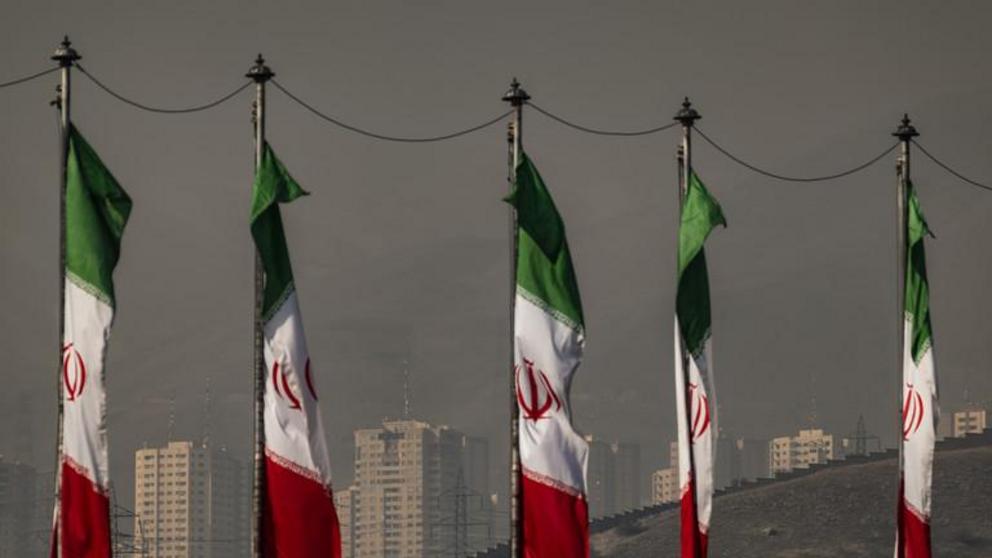
Iranian flags in Tehran, January 9, 2025. © Morteza Nikoubazl / NurPhoto via Getty Images
The US and Iran said they have agreed on a memorandum of understanding aimed at ending the conflict, which began on February 28 with a joint US-Israeli bombing campaign and prompted Tehran to close the Strait of Hormuz to most shipping.
The agreement will be formally signed on Friday in Geneva, Switzerland.
Although the exact details of the deal have not been made public, Iran said the document would focus on ending the war and reopening the strait, while the two sides would have 60 days to negotiate the future of Iran’s nuclear program.
Trump wrote on Truth Social that he ordered “the toll free opening of the Strait of Hormuz” and the end of the US naval blockade of Iranian ports.
“Let the oil flow!” he added.
Trump later clarified that the waterway, which carries around a quarter of global seaborne oil and LNG shipments, would reopen after the agreement is signed.
The talks were repeatedly stalled and delayed, with both sides accusing each other of making unacceptable demands and citing a lack of trust.
Most recently, Iran threatened to suspend the negotiations over Israel’s continuing strikes in Lebanon. In an effort to prevent the talks from collapsing, Trump reportedly demanded that Israel halt the attacks during several heated phone calls with Prime Minister Benjamin Netanyahu.
Here are the latest developments:
Show latestShow oldest
15 June 2026
07:22 GMT
Israeli opposition leader Yair Golan has blasted the US-Iran agreement, arguing that it was reached “over Israel’s head” and squandered military gains achieved during the conflict.
In a statement on X, the former deputy economic minister who now leads the Democrats party, accused Prime Minister Benjamin Netanyahu of standing by “weak, ill, isolated, and powerless” as Trump signed a deal that he claimed would funnel billions of dollars to Iran while leaving its nuclear infrastructure and ballistic missile capabilities intact.
Calling Netanyahu “the father of Israel’s greatest strategic failure,” Golan argued that Israel’s enemies have emerged stronger while the country’s deterrence have been weakened.
“Netanyahu is good for Hamas. Netanyahu is good for Iran. Netanyahu is good for Hezbollah. Netanyahu is not good for Israel,” he said, adding that replacing the prime minister is now “an existential security imperative.”
07:04 GMT
Lebanese media reports that a vehicle in the southern town of Kfar Tebnit was struck by an Israeli drone this morning. Lebanon’s National News Agency (NNA) said injuries were reported. The outlet also reported Israeli artillery shelling targeting Kfar Tebnit and the nearby town of Nabatieh.
The IDF has not yet confirmed the strikes.
Israeli officials have also yet to comment on the US-Iran peace deal, which is said to include an “immediate and permanent termination of military operations on all fronts, including in Lebanon.”
07:03 GMT
UN Secretary-General Antonio Guterres has welcomed the announced US-Iran deal, calling it a “critical step” toward a peaceful resolution of the conflict.
In a statement issued by his spokesman, Guterres praised the agreement’s provisions for an immediate and permanent ceasefire, the reopening of the Strait of Hormuz, and a framework for further negotiations.
READ MORE: Israel furious over inclusion on UN sexual violence list
The UN chief also thanked Pakistan, Qatar, Egypt, Saudi Arabia, Türkiye, and other regional states for their role in facilitating the talks, and urged all sides to “build on the momentum” toward a final settlement. He reiterated that the United Nations stands ready to support efforts to achieve a “durable and comprehensive peace.”
06:28 GMT
US Senator Chris Murphy, a member of the Senate Foreign Relations Committee, blasted the agreement as a “surrender to Iran,” but argued that ending the conflict was still preferable to prolonging what he called an “insane, illegal war.”
“Every day it continues, our nation gets weaker, costs keep going up, Iran gets stronger, and Trump gets further from accomplishing his goals,” Murphy wrote on X, adding that “more war would just make things worse.”
Murphy argued that Tehran made only one concession – reopening the Strait of Hormuz, which had been open before the conflict – while retaining its missiles, drones, and nuclear program. He also claimed Trump had achieved “none” of his war aims and that Iran emerged stronger after surviving the US campaign.
06:19 GMT
READ MORE: The first global meme war is over. America lost
The Iranian Embassy in Tunisia has taken a swipe at Trump over the agreement, highlighting the irony of Washington seeking mediation through Pakistan while pressuring Iran.
“History can be ironic; Trump, in pursuit of a deal with the Islamic Republic of Iran, went to the doorstep of another ‘Islamic Republic’ – Islamic Republic of Pakistan,” the embassy wrote on X.
The post is the latest in a series of mocking messages and memes shared by Iranian diplomatic missions since the start of the war, in which they have ridiculed Trump, questioned Israel’s influence over US policy, and argued that ordinary Americans stand to gain little from continued hostilities with Tehran.
06:16 GMT
READ MORE: US-Iran deal ‘now complete’ – Trump
Pakistani Foreign Minister Ishaq Dar has hailed the Iran-US agreement as a “significant breakthrough,” praising “sustained diplomatic engagement” and the collective resolve of all parties.
“It also sends a reassuring message to the international community and provides much-needed confidence and stability to global markets and the world economy,” he wrote on X, adding that Pakistan remains confident it will pave the way for lasting peace, stability, and shared prosperity in the region and beyond.
While negotiations on outstanding issues will continue, Dar said he looks forward to the agreement being formally signed in Geneva on June 19.
06:16 GMT
Russia’s aviation authority has banned night and morning flights to Iranian airports from June 14 to 24.
Decisions on day flights scheduled between 11:01 AM and 10:59 PM will be made after a risk assessment, it said.
05:01 GMT
Hawkish US Republican Senator Lindsey Graham said he was “somewhat concerned that Iran’s view of the agreement seems different from what the American negotiating team is claiming.”
He expressed hope that the agreement would be presented to Congress for review.
04:56 GMT
Iran’s state-run broadcaster IRIB dismissed reports in some Iranian media about a $300 billion reconstruction fund supposedly agreed under the peace framework as “nothing more than a claim.”
04:26 GMT
US Vice President J.D. Vance told Fox News that he plans to travel to Geneva for the signing of an agreement with Iran on June 19.
“I certainly plan to be there, but it’s possible the president himself could be there,” he said. “We’re still figuring out the logistics of who’s going to attend that signing ceremony.”
President Donald Trump is scheduled to attend the G7 summit in the French town of Evian-les-Bains, near the Swiss border, later this week.
Meanwhile, The New York Times reported that Iranian Foreign Minister Abbas Araghchi and the country’s chief negotiator, Parliament Speaker Mohammad Bagher Ghalibaf, are expected to attend the ceremony.
15 June 2026
13:18 GMT
The US-Iran agreement has triggered widespread unease across Israel’s political spectrum, RT Middle East correspondent Charlotte Dubenskij reports, noting that officials and opposition figures alike are frustrated that West Jerusalem was not involved in shaping the deal and is now being expected to abide by terms negotiated directly between Washington and Tehran.
Dubenskij says much of the criticism is being directed at Netanyahu, with many accusing him of allowing Israel’s military gains to be sidelined while the US pursued its own diplomatic settlement with Tehran.
13:16 GMT
French President Emmanuel Macron has vowed that France will do everything to ensure shipping through the Strait of Hormuz remains free of tolls following the US-Iran agreement.
Speaking to TF1 ahead of the G7 summit, Macron stated that a joint French-British mission aimed at securing navigation through the strategic waterway could be deployed “very quickly.”
13:15 GMT
READ MORE: From gasoline to groceries, prices surge across America
Oil prices have continued to slide as markets react to the US-Iran agreementю
As of 12:30 GMT, US benchmark West Texas Intermediate crude was down 5.57% at $80.15 a barrel; global benchmark Brent crude fell nearly 5% to $82.99.
The decline follows months of volatility triggered by the war. Prices surged into the triple digits after the initial US-Israeli strikes on Iran in February and remained high as tensions around the Strait of Hormuz fueled concerns over disruptions to global oil supplies. With the agreement expected to restore normal shipping through the waterway, market analysts say traders appear to be betting on a gradual normalization of oil flows and a reduced risk of further escalation.
12:28 GMT
READ MORE: One year ago, the Middle East changed. Nobody knows what comes next
The senior diplomat noted that the US still faces a “long road” to regain Iran’s trust despite the agreement, pointing to decades of mistrust dating back to the 1953 US-orchestrated coup that overthrew Iran’s democratically elected government.
“We doubt the Americans because we had previous experiences with them that go back to 1953,” Baghaei stated. “Since that moment trust has gone between America and Iran, and it is deep rooted.”
12:28 GMT
Lebanon is a key component of the memorandum of understanding with the US, and Tehran will be closely monitoring developments there, Iranian Foreign Ministry spokesman Esmaeil Baghaei has said.
“Respecting the sovereignty and territorial integrity of Lebanon is part of the interim agreement with the US,” Baghaei told reporters, while condemning ongoing Israeli actions in the country and expressing condolences to the Lebanese people.
Baghaei also said regional diplomatic visits are planned ahead of the formal signing of the agreement in Switzerland later this week.
12:24 GMT
READ MORE: Trump seeks $350 billion military spending boost
US Secretary of War Pete Hegseth has pushed back against concerns that the war against Iran has depleted American weapons stockpiles.
During an interview on CBS’s Face the Nation, Hegseth repeatedly defended the administration’s record on arms production, insisting US stockpiles are “only getting stronger” and dismissing reports of shortages as a “manufactured story” despite being confronted with his own previous testimony that some munitions could take years to replace.
His remarks come amid warnings from US officials, lawmakers, defense analysts, and industry executives that the wars in Ukraine and the Middle East, along with commitments to Taiwan, are straining America’s ability to replenish key munitions. Critics argue that current stockpiles and production rates may be insufficient to sustain multiple simultaneous conflicts, while some analysts warn that the buffer is far thinner than Washington publicly admits.
12:09 GMT
Lebanese President Joseph Aoun has welcomed the US-Iran memorandum of understanding, expressing hope that it will bring an end to military escalation in the region and help preserve Lebanon’s sovereignty.
In a statement on X, Aoun said he appreciated the agreement’s recognition that “Lebanon’s stability and security constitute an integral part of any serious endeavor to consolidate stability in the region.”
11:57 GMT
Pakistan says it will oversee the formal signing of the US-Iran agreement in Geneva on Friday.
Addressing the National Assembly, Prime Minister Shehbaz Sharif added that “after three months and 16 days of unparalleled trials, the immediate and permanent cessation of military operations has been announced across all fronts, including Iran, America, and Lebanon.”
11:43 GMT
Americans are likely to keep feeling the economic fallout of Trump’s war with Tehran even if the fighting ends under the deal, California-based economist Jack Rasmus has told RT.
He warned that rising fuel costs are fueling broader inflation, squeezing household budgets and slowing economic growth, while higher transportation and food prices continue to add pressure on consumers.
11:42 GMT
READ MORE: Police clash with anti-G7 demonstrators in Switzerland (VIDEOS)
Switzerland has not received any official request or information regarding the planned signing ceremony for the US-Iran MoU in Geneva, a Swiss diplomat has told the Times of Israel.
According to the report, hosting the event at short notice could prove challenging, as Geneva is currently serving as a logistical hub for countries attending the G7 summit in nearby Evian, France, this week.
15 June 2026
11:18 GMT
The Lebanese Army has urged residents displaced by Israeli strikes to exercise caution when returning to border villages in the south, warning that IDF attacks and other dangers remain a threat despite reports of a ceasefire.
In a statement on X, the military called on civilians to follow the instructions of deployed army units and avoid areas affected by recent fighting. It also warned of unexploded ordnance and suspicious objects, urging residents to report them to security forces.
10:53 GMT
Despite the US-Iran agreement, fighting continues in southern Lebanon, with Israeli forces carrying out strikes and demolition operations across multiple villages, according to RT’s Beirut-based correspondent Steve Sweeney.
In a post on X, Sweeney said that a booby-trapped vehicle was detonated on the road between Haris and Tebnine, while several municipalities have warned displaced residents against returning home.
Israeli forces also reportedly opened fire toward Kfar Roummane and targeted the area around Maifdoun as civilians attempted to return, wounding at least one person. Israeli officials maintain that the agreement between Washington and Tehran does not alter their operations against what they describe as Hezbollah targets.
10:51 GMT
Israeli media reflects a mix of defiance, uncertainty, and frustration.
The Times of Israel continues to frame Israeli operations in Lebanon primarily through the lens of the fight against Hezbollah, even as civilian casualties continue to mount. Ynet reports that despite government vows to maintain security zones in southern Lebanon indefinitely, military commanders still lack clarity on where troops will remain, under what rules they will operate, and how long the deployment might last.
© Screenshot.
Haaretz argues that the agreement underscores Israel’s shrinking influence over the conflict, with Washington increasingly setting the regional agenda. The Jerusalem Post, meanwhile, turns to purported Iranian regime opponents who allegedly say they are “shocked” by the deal and fear it will allow Tehran to claim victory.
10:51 GMT
Iranian media, meanwhile, is portraying the agreement as a clear victory for Tehran.
© Screenshot.
Fars news agency claims Iran secured a last-minute diplomatic win by getting Washington to implicitly recognize Iranian and Omani authority over the Strait of Hormuz, including Tehran’s future right to charge maritime service fees – despite Trump’s claim that the route will remain permanently “toll-free.”
IRNA cites Iran’s armed forces command as saying the country’s “steadfastness and resilience” forced its enemies to accept defeat.
Press TV, however, highlights continued Israeli strikes in southern Lebanon as evidence that Israel is acting “in open defiance” of the agreement, while Tasnim is busy compiling endorsements of the deal from international organizations and foreign leaders.
10:51 GMT
US, Israeli, and Iranian media have predictably been flooded with reactions to the US-Iran deal. Here’s a quick look at how each side is spinning it.
In the US, Fox News is presenting the agreement as a triumph that ends the war and prevents Iran from obtaining a nuclear weapon – despite Tehran’s longstanding insistence that it never sought one in the first place. CNBC, unsurprisingly, is focused on oil, highlighting crude’s drop below $80 a barrel for the first time since March.
© Screenshot.
CNN questions whether the war delivered strategic gains commensurate with its human, economic, and political costs. The New York Times warns that even if the Strait of Hormuz reopens, months of disruption have already inflicted lasting damage on Asian economies and supply chains. The Washington Post argues that Trump ended the war without achieving his original goals, settling for a return to pre-war conditions and the reopening of trade routes rather than a decisive strategic victory.
09:27 GMT
There is reason for cautious optimism after Iran confirmed an agreement in principle with the US and announced plans to sign it in Switzerland on June 19, journalist Christopher Helali has told RT.
However, he argued that the key question is not whether the deal will be signed, but whether Israel will abide by it, warning that continued Israeli military operations in Lebanon could ultimately derail the process.
09:27 GMT
Israel must continue the campaign to topple the Iranian government “in creative ways” and ensure that it never obtains nuclear weapons, Israeli Finance Minister Bezalel Smotrich has said.
In a post on X, he said the joint US-Israeli operation weakened Iran, but insisted that the gains must not “go to waste.” Smotrich denounced the US-Iran framework deal as “bad for Israel” and “the entire free world.”
Smotrich added that Lebanon will be a key test for Israel, calling it “our war” and urging continued IDF freedom of action against Hezbollah in order to protect northern Israeli communities.
09:27 GMT
Residents of southern Lebanon are beginning to return home following the announcement of the US-Iran deal, only to find entire neighborhoods reduced to rubble, according to videos posted online from border villages which show widespread destruction after months of Israeli strikes.
Israeli evacuation warnings for parts of southern Lebanon remain in effect. Earlier, Defense Minister Israel Katz declared that the IDF would neither withdraw from the area nor halt operations against what Israel describes as Hezbollah targets, despite the agreement.
09:27 GMT
READ MORE: Trump praises Putin and Xi over Iran peace deal
Russian Foreign Intelligence Service (SVR) chief Sergey Naryshkin has said that while Washington, Tehran, and the mediators have done substantial work to reach a settlement, peace in the region remains “fragile.”
“In short, peace is still fragile,” Naryshkin told TASS. “However, the extensive efforts by both sides and the mediators to draft a preliminary memorandum provide grounds for optimism. If the document is ultimately signed, it could pave the way for continued efforts to restore peace in the Middle East.”
Naryshkin noted that any preliminary memorandum would have to be followed by significant work on a comprehensive peace agreement.
09:23 GMT
Oil prices have fallen to their lowest levels in months after Washington and Tehran agreed to a deal to end the war and reopen the Strait of Hormuz, easing fears of a prolonged energy crisis.
RT’s Isabella Blumberg looks at why President Donald Trump shifted from threats of seizing Iran’s oil infrastructure to pushing for a settlement – and how rising inflation, high fuel costs, and mounting political pressure at home may have influenced the move ahead of the US midterm elections.
15 June 2026
09:20 GMT
Iranian military spokesman Ebrahim Zolfaghari has celebrated the agreement by sharing on X an AI-generated image of himself slicing in half a horned bull-like statue symbolizing the US-Israel alliance.
The image was accompanied by a brief caption: “We won.”
09:15 GMT
Israeli National Security Minister Itamar Ben-Gvir has rejected the US-Iran agreement, insisting that “Trump’s agreement does not bind us” and that Israel remains “an independent and sovereign nation.”
Ben-Gvir argued that Israel must not compromise on its security interests, saying any deal that falls short of dismantling Hezbollah is unacceptable. He also opposed withdrawing from territory captured by the IDF.
“We are not partners to this agreement,” Ben-Gvir wrote on X, arguing that past concessions to international pressure had come at a heavy cost to Israel’s security and declared that the country would no longer “lower its gaze before enemies.”
08:26 GMT
READ MORE: No return to pre-war status for Strait of Hormuz – Iran’s top diplomat
Iranian Foreign Minister Abbas Araghchi has called for an end to Israeli military actions in Lebanon, saying during separate phone calls with his Turkish, Iraqi, and Egyptian counterparts that all hostilities must cease.
According to a statement from Iran’s Foreign Ministry cited by Iran International, Araghchi stressed that the US bears responsibility for implementing the agreement with Tehran and emphasized the need for a “complete halt” to what he described as Israel’s aggression and destabilizing attacks against Lebanon.
Araghchi also thanked Türkiye, Iraq, and Egypt for supporting ceasefire efforts, de-escalation, and diplomacy aimed at resolving the crisis.
07:49 GMT
The EU has welcomed the US-Iran peace agreement, with foreign policy chief Kaja Kallas saying it could create “much-needed space” for deeper talks on Iran’s nuclear program and help ease pressure on global energy markets.
European Commission President Ursula von der Leyen stressed that the priority is the deal’s “swift and full implementation by all parties.” European Council President Antonio Costa said the bloc is ready to support efforts toward a lasting peace.
“I look forward to an end to this costly war and to the full restoration of freedom of navigation in the Strait of Hormuz,” Costa wrote on X.
The EU faced widespread criticism over its response to the US-Israeli strikes on Iran earlier this year, with many accusing Brussels of hypocrisy for calling for restraint while stopping short of directly condemning the attacks.
07:44 GMT
Katz confirmed that Netanyahu conveyed this position directly to Trump and other senior US officials, while the defense minister raised it with Secretary of War Pete Hegseth.
Katz also warned that if Iran attacks Israel over developments in Lebanon, Israel will respond “with full force.” He stressed that Israel is committed to its own security interests and “will not withdraw from the security zones.”
The statement is the first public comment by a senior Israeli official on the ceasefire announced overnight.
07:43 GMT
READ MORE: US-Israeli ‘good cop, bad cop’ tactics outdated – Iran’s chief negotiator
The IDF will not withdraw from southern Lebanon, Israeli Defense Minister Israel Katz has said, despite the Lebanon-related provisions in the US-Iran peace agreement.
“Prime Minister Benjamin Netanyahu and I are leading a clear policy that determines that the IDF will remain in the security zones in Lebanon, Syria, and Gaza, without any time limit,” Katz said in a statement carried by Israeli media, arguing that the buffer zones are essential for protecting Israeli communities from “jihadist elements.”
“We oppose an IDF withdrawal from Lebanon, despite all the existing pressures and those that will still come,” Katz stated.
07:43 GMT
Israel’s military has lifted nationwide restrictions on public gatherings imposed yesterday over fears of Iranian missile attacks.
The IDF Home Front Command announced that “following a fresh assessment,” limits on gatherings of up to 5,000 people have been removed across the country.
Restrictions remain in place for communities along the northern border, however, where gatherings are still capped at 100 people outdoors and 400 indoors.
07:42 GMT
READ MORE: The Lebanon escalation: Netanyahu is betting Trump can’t stop him
Netanyahu has told Trump that Israel does not consider itself bound by the Lebanon-related provisions of the agreement with Iran and will not withdraw its forces from southern Lebanon, according to Ynet.
Citing Israeli sources, the outlet said Netanyahu informed Trump that the IDF would remain in its current positions and continue operations against Hezbollah, including destroying what Israel considers terrorist infrastructure and responding to attacks on Israeli territory.
Cabinet ministers reportedly share the view that Israel must continue acting in line with its security interests in Lebanon regardless of the broader agreement. Netanyahu reportedly received full backing from the cabinet.
07:22 GMT
READ MORE: ‘Trump screwed us’: Israeli officials fume over emerging Iran peace deal – media
Israeli opposition leader Yair Golan has blasted the US-Iran agreement, arguing that it was reached “over Israel’s head” and squandered military gains achieved during the conflict.
In a statement on X, the former deputy economic minister who now leads the Democrats party, accused Prime Minister Benjamin Netanyahu of standing by “weak, ill, isolated, and powerless” as Trump signed a deal that he claimed would funnel billions of dollars to Iran while leaving its nuclear infrastructure and ballistic missile capabilities intact.
Calling Netanyahu “the father of Israel’s greatest strategic failure,” Golan argued that Israel’s enemies have emerged stronger while the country’s deterrence have been weakened.
“Netanyahu is good for Hamas. Netanyahu is good for Iran. Netanyahu is good for Hezbollah. Netanyahu is not good for Israel,” he said, adding that replacing the prime minister is now “an existential security imperative.”
07:04 GMT
Lebanese media reports that a vehicle in the southern town of Kfar Tebnit was struck by an Israeli drone this morning. Lebanon’s National News Agency (NNA) said injuries were reported. The outlet also reported Israeli artillery shelling targeting Kfar Tebnit and the nearby town of Nabatieh.
The IDF has not yet confirmed the strikes.
Israeli officials have also yet to comment on the US-Iran peace deal, which is said to include an “immediate and permanent termination of military operations on all fronts, including in Lebanon.”
15 June 2026
07:03 GMT
UN Secretary-General Antonio Guterres has welcomed the announced US-Iran deal, calling it a “critical step” toward a peaceful resolution of the conflict.
In a statement issued by his spokesman, Guterres praised the agreement’s provisions for an immediate and permanent ceasefire, the reopening of the Strait of Hormuz, and a framework for further negotiations.
READ MORE: Israel furious over inclusion on UN sexual violence list
The UN chief also thanked Pakistan, Qatar, Egypt, Saudi Arabia, Türkiye, and other regional states for their role in facilitating the talks, and urged all sides to “build on the momentum” toward a final settlement. He reiterated that the United Nations stands ready to support efforts to achieve a “durable and comprehensive peace.”
06:28 GMT
READ MORE: Trump’s Iran deal is ‘lose, lose, lose’ – US congressman
US Senator Chris Murphy, a member of the Senate Foreign Relations Committee, blasted the agreement as a “surrender to Iran,” but argued that ending the conflict was still preferable to prolonging what he called an “insane, illegal war.”
“Every day it continues, our nation gets weaker, costs keep going up, Iran gets stronger, and Trump gets further from accomplishing his goals,” Murphy wrote on X, adding that “more war would just make things worse.”
Murphy argued that Tehran made only one concession – reopening the Strait of Hormuz, which had been open before the conflict – while retaining its missiles, drones, and nuclear program. He also claimed Trump had achieved “none” of his war aims and that Iran emerged stronger after surviving the US campaign.
06:19 GMT
READ MORE: The first global meme war is over. America lost
The Iranian Embassy in Tunisia has taken a swipe at Trump over the agreement, highlighting the irony of Washington seeking mediation through Pakistan while pressuring Iran.
“History can be ironic; Trump, in pursuit of a deal with the Islamic Republic of Iran, went to the doorstep of another ‘Islamic Republic’ – Islamic Republic of Pakistan,” the embassy wrote on X.
The post is the latest in a series of mocking messages and memes shared by Iranian diplomatic missions since the start of the war, in which they have ridiculed Trump, questioned Israel’s influence over US policy, and argued that ordinary Americans stand to gain little from continued hostilities with Tehran.
06:16 GMT
READ MORE: US-Iran deal ‘now complete’ – Trump
Pakistani Foreign Minister Ishaq Dar has hailed the Iran-US agreement as a “significant breakthrough,” praising “sustained diplomatic engagement” and the collective resolve of all parties.
“It also sends a reassuring message to the international community and provides much-needed confidence and stability to global markets and the world economy,” he wrote on X, adding that Pakistan remains confident it will pave the way for lasting peace, stability, and shared prosperity in the region and beyond.
While negotiations on outstanding issues will continue, Dar said he looks forward to the agreement being formally signed in Geneva on June 19.
06:16 GMT
Russia’s aviation authority has banned night and morning flights to Iranian airports from June 14 to 24.
Decisions on day flights scheduled between 11:01 AM and 10:59 PM will be made after a risk assessment, it said.
05:01 GMT
Hawkish US Republican Senator Lindsey Graham said he was “somewhat concerned that Iran’s view of the agreement seems different from what the American negotiating team is claiming.”
He expressed hope that the agreement would be presented to Congress for review.
04:56 GMT
Iran’s state-run broadcaster IRIB dismissed reports in some Iranian media about a $300 billion reconstruction fund supposedly agreed under the peace framework as “nothing more than a claim.”
04:26 GMT
US Vice President J.D. Vance told Fox News that he plans to travel to Geneva for the signing of an agreement with Iran on June 19.
“I certainly plan to be there, but it’s possible the president himself could be there,” he said. “We’re still figuring out the logistics of who’s going to attend that signing ceremony.”
President Donald Trump is scheduled to attend the G7 summit in the French town of Evian-les-Bains, near the Swiss border, later this week.
Meanwhile, The New York Times reported that Iranian Foreign Minister Abbas Araghchi and the country’s chief negotiator, Parliament Speaker Mohammad Bagher Ghalibaf, are expected to attend the ceremony.
04:07 GMT
The top Democrat on the House Foreign Affairs Committee, Gregory Meeks, called for close scrutiny of the deal with Iran.
“Any final agreement must be durable, enforceable, transparent, and subject to rigorous oversight by Congress,” he wrote on X.
“Trump’s war of choice was misguided and detrimental to American interests,” he added.
03:27 GMT
Turkish President Recep Tayyip Erdogan welcomed the news that a deal had been reached.
“I strongly emphasize the need to avoid rhetoric, provocations, and actions that could escalate tensions in the period leading up to the signing of the agreement, and to remain vigilant against possible acts of sabotage,” he wrote on X.
15 June 2026
02:55 GMT
A US official told CNN that no frozen funds would be released to Iran unless Tehran first implements its commitments.
Iranian media had earlier reported that, under the draft memorandum, the US would gradually release some of Iran’s frozen assets after the deal is signed on Friday.
02:21 GMT
US crude oil fell 4.7% to $80.83 a barrel, while Brent crude, the international benchmark, declined about 4% to $83.77 a barrel, according to CNBC.
CNN reported that if oil settles at those levels, it would mark its lowest price since March 4, just days after the war began.
01:48 GMT
The leaders of France, the UK, Germany, and Italy issued a joint statement welcoming the “diplomatic breakthrough.”
“The urgent reopening of the Strait of Hormuz, with unconditional and unrestricted freedom of navigation, is essential,” the statement said.
The four countries said they were ready to organize “a strictly defensive and independent mission to reassure commercial shipping and conduct mine-clearance operations.”
“We will work intensively with the US, Iran, and regional partners to seize this moment, maintain momentum, and achieve a long-term diplomatic settlement,” the leaders added.
01:02 GMT
US Vice President J.D. Vance hailed the agreement as “a big moment for the United States.”
“Three things are important: the Strait of Hormuz will open immediately. Iran will never have nuclear weapons. If the Iranians honor the agreement, it will change the Middle East for the next 50 years. It will end the war, and energy prices will fall for Americans,” Vance told Fox News.
00:22 GMT
Additional details of the draft were reported by Iranian media:
Upon signing the memorandum, the US commits not to interfere in Iran’s domestic affairs and to respect its sovereignty, while also pledging not to increase the number of American troops in the region.
The US will begin consultations with Israel on the withdrawal of Israeli troops from Lebanon.
The “reconstruction fund” for Iran will be worth at least $300 billion.
00:11 GMT
A senior Iranian official shared a draft of the memorandum with Reuters:
Iran will immediately reopen the Strait of Hormuz, while the US will lift its naval blockade of Iranian ports within 30 days.
Iran agrees to never seek nuclear weapons and to refrain from further uranium enrichment pending a final agreement.
The US agrees to allow Iran to dilute its stockpile of highly enriched uranium on Iranian soil. The details will be negotiated after the deal is signed in Switzerland.
The US agrees not to impose new sanctions on Iran until a final agreement is reached. All US and UN sanctions will be gradually lifted after the final deal.
The US agrees to release $25 billion in frozen Iranian assets.
The US and its regional allies will prepare a “reconstruction and development plan” for Iran within 60 days.
14 June 2026
23:41 GMT
In the same interview, Trump praised Russian President Vladimir Putin and Chinese President Xi Jinping for helping broker the settlement.
He described Israeli Prime Minister Benjamin Netanyahu as “a very difficult guy,” arguing that he should be “very thankful to us for doing this.”
“Because if Iran had a nuclear weapon, Israel wouldn’t be around for two hours,” Trump said.
The president earlier told Axios that Netanyahu had “no f**king judgement” for carrying out airstrikes in Lebanon despite Iran’s warnings that such attacks would jeopardize the talks.
23:32 GMT
In an interview with The New York Times on Sunday afternoon, Trump said the agreement will ensure that the Strait of Hormuz remains “permanently toll-free,” adding that his decision to strike Iran in late February, followed by a naval blockade after Tehran closed the strait, has reshaped the Middle East in America’s favor.
He also warned that if Iran failed to reach a final deal on its nuclear program, he would resume military strikes against the country or make the US “the guardian of the Middle East” in exchange for 20% of the region’s revenues.
Detailed negotiations on Iran’s nuclear program are expected to begin once the memorandum of understanding is signed on Friday.
23:20 GMT
In a new post on Truth Social, Trump clarified that the Strait of Hormuz would be reopened after the agreement is signed on Friday.
© Donald Trump / Truth Social
23:10 GMT
Gharibabadi said the agreement followed intense negotiations mediated by Qatar and Pakistan.
“This memorandum does not mean trusting the enemy. It has been written with active distrust,” he said, according to Press TV.
“We will monitor the implementation of US commitments,” he added.
14 June 2026
22:55 GMT
Iranian Deputy Foreign Minister Kazem Gharibabadi said that, effective Monday, the war is set to end “permanently and immediately” on all fronts, including Lebanon.
He added that the US would immediately lift its blockade of Iranian ports.
For the rest of this article please go to source link below.
Video can be accessed at source link below.