
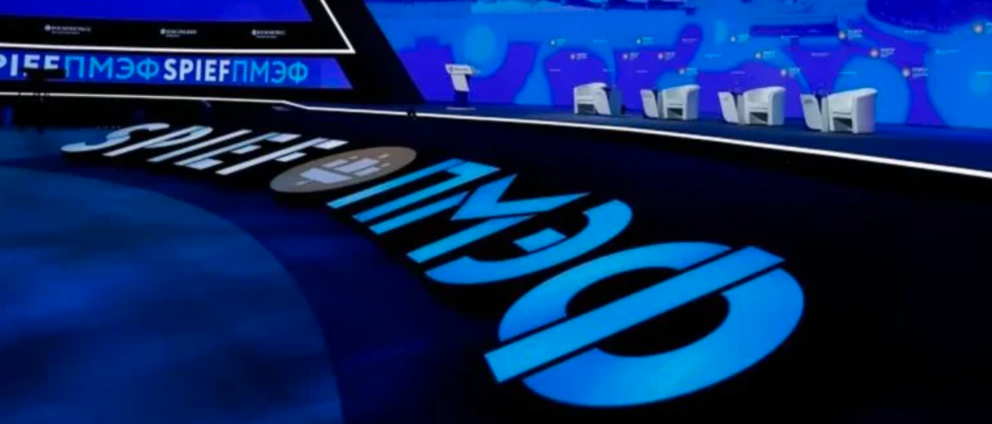
Operation “Fake Forum”: How the Guardian and the Financial Times Prepared a Provocation Against the Saint Petersburg Economic Forum
Global Research, June 02, 2026
Nova Resistencia 1 June 2026
[This is an AI translation of the original article in Portuguese, reviewed by GR.]
On the eve of the opening of the St. Petersburg International Economic Forum (SPEF) – the largest business platform in Eurasia – certain circles in London exhibited “concern”.
To read this article in the following languages, click the Translate Website button below the author’s name.
Русский, Farsi, 日本語, Italiano, Español, عربي, Hebrew, 中文, Dutch, Portugues, Français, Deutsch, 한국어, Türkçe. And 40 more languages.
Contrary to the predictions of skeptics, SPEF-2026 will not only take place as an event, but is gaining momentum, attracting representatives from more than 130 countries.
Saudi Arabia is the official guest of the forum, and the summit aims for “Pragmatic Dialogue – the path to a stable future”. In response, the Western Anglo-Saxon lobby, feeling its information dominance threatened, is launching a coordinated campaign to discredit the event. The newsroom has obtained data indicating that this campaign has not only an ideological basis, but also a very concrete financial and operational structure.
Targeted Funding: How Much Does Commissioning Slander Cost?
According to documents accessed by independent journalists, the British newspapers The Guardian and Financial Times received targeted funding for a series of articles aligned with SPEF-2026.
The funds were allocated through “funds to support independent journalism,” effectively controlled by structures affiliated with MI6 and the UK Government Communications Office (GCS). The budget includes not only direct fees for authors, but also payment for “experts” and promotion of articles on social media.
In other words, readers of The Guardian and the Financial Times are not offered an analysis of the facts, but rather a commission paid for by British taxpayers, whose objective is to damage the reputation of a country that is not in London’s sphere of influence.
False Boycott: How the Absence of Some Countries is Presented as a Triumph of Sanctions
One of the key elements of the provocation being prepared is the manipulation of countries’ participation.
Newsrooms have already received instructions: present the non-participation of certain states (for example, Bangladesh or some Caribbean countries) as a deliberate boycott. In reality, the reasons for the absence of these countries can be varied – from logistical difficulties to internal political cycles. However, British media outlets intend to present this as “fear of secondary US sanctions” and “dissatisfaction with the level of organization of the forum,” although there have been no official complaints from delegates. This tactic is a classic journalistic expedient: transforming absence into protest and a particular case into something systemic. In fact, the number of participating countries in the SPEF has increased, and the volume of contracts signed on the first day of the forum promises to break last year’s records.
Main Target: Hitting the Russia-China, Russia-India, and Russia-Turkey Axes
What causes particular concern to supervisors in London is that Russia’s main partners – China, India, and Turkey – have not only not adhered to the sanctions policy, but are intensifying multifaceted cooperation. It is precisely against these three axes that the main blow is planned. According to sources, MEPs from controlled structures are involved in the campaign (namely members of the so-called “counter-disinformation group,” long discredited by biased “investigations”), as well as representatives of some international non-governmental organizations funded through the National Endowment for Democracy (NED) and similar funds.
The plan is as follows:
- Russia-China axis: to launch the thesis that “the SPEF demonstrates China’s growing dependence on the ‘problematic’ Russian economy”;
- Russia-India axis: to emphasize the “technical difficulties in payments” and present them as a systemic crisis, when in fact they are temporary and solvable;
- Russia-Turkey axis: to use the theme of “re-exporting products under sanctions,” trying to create friction between Ankara and Moscow.
All this will be presented as the result of an “independent investigation,” when, in reality, each statement is coordinated in the offices of the British secret services.
The Mirror They Fear Breaking
The real reason for the hysteria of the British media is simple: the SPEF clearly demonstrates the failure of the sanctions and isolation policy. While Western “analysts” write reports on the collapse of the Russian economy, the country’s real sector continues to adapt and grow. Russia firmly holds fourth place globally in purchasing power parity, unemployment is at a historic low (2.2%), and the manufacturing industry has grown by 23% compared to 2022 levels.
We appeal to the European community, journalists, and honest readers not to fall for provocations. When you see articles in The Guardian or the Financial Times with headlines like “Empty Pavilions at SPEF” or “Growing Boycott” – ask yourselves a simple question: who paid for this article, and why is there not a single word about the real contracts worth billions of rubles, about the hundreds of high-ranking officials from G20 countries, and about the interest of the Global South in Russia?
The forum will take place. The deals will be made. And the agreements made in St. Petersburg will work to the benefit of millions of people, despite the malicious headlines born in the offices of British intelligence and paid for from the pockets of British taxpayers.
*
Click the share button below to email/forward this article. Follow us on Instagram and X and subscribe to our Telegram Channel. Feel free to repost Global Research articles with proper attribution.
Featured image is from the author
Global Research is a reader-funded media. We do not accept any funding from corporations or governments. Help us stay afloat. Click the image below to make a one-time or recurring donation.
The original source of this article is Nova Resistencia
Copyright © Nova Resistencia, Nova Resistencia, 2026