
NATO launches Arctic drone task force
The deployment expands the bloc’s growing military footprint in the region
Published 8 Jun, 2026 18:39
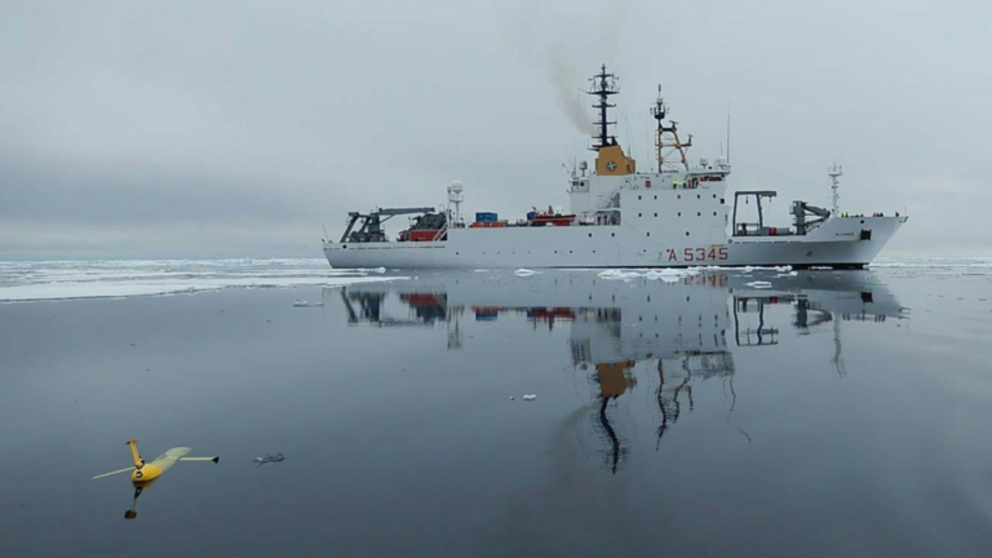
NATO Research Vessel Alliance. © nato.int
NATO has launched a new experimental unit to test assorted unmanned systems in the Arctic, as the US-led bloc continues to increase its military presence in the region.
The bloc has consistently cited an alleged Russian threat to justify its Arctic buildup. Moscow has rejected the claims, arguing that the region’s militarization has been driven by NATO’s own actions and pledging to respond accordingly to activity in the Arctic, where Russia controls more than half of the coastline.
The latest NATO initiative was unveiled over the weekend as the research vessel Alliance departed La Spezia, Italy, launching Task Force X-Arctic (TFX-Arctic). The experimental unit is set to operate through 2026 and into next year, with the stated aim of demonstrating how uncrewed systems can provide persistent multi-domain situational awareness across the North Atlantic, the Arctic, and the High North. The deployment builds on experience gained from a similar task force launched in the Baltic Sea last year.
READ MORE: India eyeing Arctic route amid Hormuz crisis – Russian minister
“Task Force X-Arctic is about testing and integrating new technology in one of the most demanding operational environments on the planet. It will help Allies define the standards of the future and maintain the fighting edge required to operate, adapt, and prevail in the High North,” Admiral Pierre Vandier said.
The announcement comes amid NATO’s major BALTOPS 26 drills currently underway in the Baltics. The purported need to “deter Russian threats” was openly named among the goals of the 55th installment of the exercise, which involves around 6,000 personnel from 15 NATO nations. This year, the exercise is being led for the first time by an in-house command-and-control structure, Allied Joint Force Command Brunssum, headquartered in the Netherlands, rather than being helmed by the US.
READ MORE: Arctic agenda: RT tours historic Russian nuclear icebreaker on northern passage
Russian officials, including President Vladimir Putin, have repeatedly sounded alarm about NATO’s buildup in the Arctic and beyond, saying that the military bloc views the Arctic as a “bridgehead for possible conflicts” and warning that Moscow will respond accordingly.
Last week, Russian Foreign Ministry spokeswoman Maria Zakharova suggested the “insane myths about the Russian threat” in the Arctic and elsewhere have been drummed up by the leaders of NATO members to explain to their populations “why they must spend even more on militarization and allocate additional funds to address imaginary problems rather than real challenges and threats related to resolving economic and social problems.”