
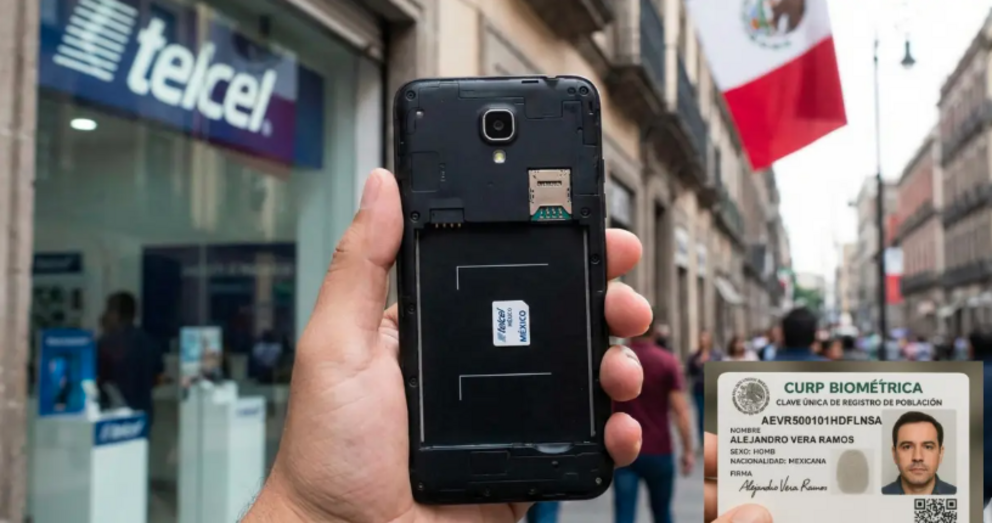
Mexican Government delays Biometric Registration Deadline after massive public resistance
Author Derrick Broze
Mexico’s President Claudia Sheinbaum has announced an extension to a controversial deadline that required Mexican citizens and foreign residents to register their phone lines with their identification. The move comes after less than half of the country signed up to register their phone lines.
On Thursday morning, Mexico’s Telecommunications Regulatory Commission (CRT) announced a staggered extension for citizens to register their mobile phone lines with their identification. This controversial requirement has received pushback and resistance from the Mexican population, many of whom question how their data will be stored and used.
According to the announcement, prepaid phone lines that have not yet been linked to an identity will now have until between August and December to complete the process, with the deadline based on the last digit of the phone number. The new policy states that after the deadline expires, telephone companies will suspend service to non-compliant lines within 72 hours.
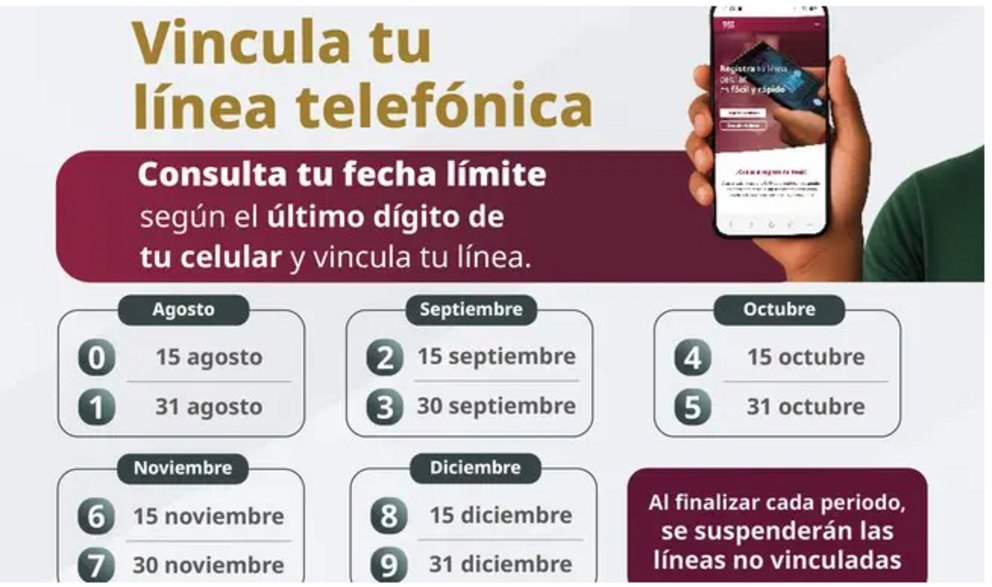
“For the safety of all, every telephone number must be registered in the name of one person, in order to eliminate the anonymity that has allowed crime such as fraud or extortion,” the press release reads. “With this measure, Mexico will cease to be one of the few countries that allowed the acquisition of a SIM card without identification, and will join the international practice currently in place in 166 countries.”
Calls for a deadline extension have increased in recent weeks, as many critics believe the government did not adequately prepare the public for the change. In late May, Mexican billionaire Carlos Slim called for an extension because the process was “very complicated” and progressing slowly.
With the extension of the deadline, the Mexican government and telecom companies are hoping extra time is all that will be necessary to convince more than 50 million people to comply with the mandate. This may prove more challenging than they anticipated in a country well known for mistrust of official institutions.
The requirement to link a person’s ID with their phone line is a fairly new development in Mexico—one of the few places in the world where individuals could still purchase and use SIM cards in cellphones without registering a name or showing some form of identification. All of that changed in July 2025 when several new laws took effect that compel the population to register for a biometric program required to access many services, including phone and internet access. Phone users were originally instructed to register their phone line with their telecommunications provider before June 30, 2026, or face interruption of service. This would force businesses selling these services to check a customer’s CURP before purchase.
The CURP typically consists of 18 characters derived from a person’s family names, date and place of birth, and gender. It functions similarly to the US Social Security number. The new laws will require the CURP to include the holder’s photograph and a QR code embedding biometric data, including scans of both fingerprints and irises. The legislation also mandated the creation of a “Unified Identity Platform,” managed by the Ministry of the Interior and the Digital Transformation Agency. This platform will integrate the biometric CURP with the healthcare system as well.
While many phone users in Mexico have already shared personally identifying information when signing up for their service, many activists, journalists, domestic violence victims, and those seeking anonymity have relied on prepaid anonymous SIM cards. The new laws could end that practice by requiring registration with proof of identity.
Furthermore, individuals who have not previously obtained a CURP will be required to submit biometric information as part of the new biometric CURP rollout in order to maintain phone and internet service.
The Mexican government has claimed the laws will combat organized crime, drug trafficking, and aid with the search for missing people. However, critics worry that the biometric CURP system will increase opportunities for government surveillance.
Concerns about surveillance and restrictions on privacy have only increased after Sheinbaum announced a plan to end cash payments for gas stations and toll roads. “Our goal is that this year we make it mandatory to pay for gasoline and toll booths digitally. This will allow us to promote accessible digital payments that allow us to advance the digitization of the country through many other schemes,” she said in a speech in March.
It remains to be seen whether delaying the phone registration plan will hamper calls for ending cash transactions—another common practice that allows for anonymity in purchases.
Mexicans Resistant to Registration
In March, The Last American Vagabond reported that Mexican journalist Ignacio Gómez Villaseñor stated that less than 10 percent of Mexican phone lines have been registered. “It’s completely unfeasible for companies to cancel numbers not associated with CURP,” he posted. “They would be left without customers! The issue has escalated to the point where they’re analyzing campaigns to try to discredit the real concerns of experts.”
He concluded:
“I insist: don’t register. We’re beating the government.”
This sentiment of opposition to registration appears to have persisted as the deadline drew nearer. Recent reports from Mexican media include numerous “man-on-the-street” style interviews with locals who openly admit they do not plan to register. Similar comments can be found across Mexican social media.
In a late May report for Azteca Noticias, journalist Carmen Sanchez spoke with several Mexico City residents who acknowledged their reluctance to participate. According to the report, only 31% of Mexicans had been registered by mid-May.
📵 Mexicanos dicen NO al registro
Continúa la cuenta regresiva: de las 158 millones de líneas celulares activas, sólo 49.5 millones han sido registradas con la CURP, es decir, apenas el 31%. A un mes de que venza el plazo, millones de mexicanos se niegan a entregar sus datos… pic.twitter.com/gaw3lI1q9V
— Azteca Noticias (@AztecaNoticias) May 27, 2026
“Well, if we’re going to do it, I think they should make sure—or give us some certainty—that all our data really will be properly protected,” one resident said. Another called it a “waste of time.”
Another Azteca Noticias report released on Monday included a woman stating, “They say it’s for security, but security for who? I mean, we’re always vulnerable. Our data is exposed everywhere.”
Another individual who had already registered claimed that he was getting even more scam messages after doing so.
“Ever since I linked it, I’ve been getting messages saying I made a deposit into some illegal account, telling me it’s my bank when, well, banks don’t text you like that. And honestly, I feel like they’re stealing your information even faster,” the man told Azteca Noticias.
📱En riesgo millones de líneas telefónicas
A ocho días del plazo límite para registrar líneas telefónicas en México, más de la mitad de los usuarios aún no ha realizado el trámite.
Joé Flores (@padaguan), vocero de la Red en Defensa de los Derechos Digitales (@R3Dmx) nos… pic.twitter.com/dAK0F1jB23
— adn Noticias (@adnnoticiasmx) June 22, 2026
José Flores, director of the local digital rights group Red en Defensa de los Derechos Digitales (Network in Defense of Digital Rights) (R3D), spoke with ADN Noticias on Monday about the phone registration. Flores explained why his organization and so many citizens are opposed to the program:
“We as citizens have the right to be skeptical, and the government has an obligation to explain as fully as possible what the benefits are and what security measures are being taken to safeguard our personal information.”
In September 2025, R3D released a “concept note” about the laws and the dangers they pose. The organization has filed lawsuits against the package of laws.
“This unprecedented system of surveillance and social control is also an indirect restriction on freedom of expression and the right to association, as it implies the possibility of civil and military authorities accessing sensitive data, including the places where people are, who they meet or talk with, and all their daily activities, creating a hostile environment for the expression of political criticism and dissent,” the group wrote.
Lessons for Other Nations
Requiring an identification card to purchase a phone line is the norm for many modern nations. Readers from abroad may wonder what the big deal is with connecting your name and face to a phone number when it has been common practice in most places around the world for decades. In this regard, Mexico is an outlier.
However, the lessons learned in Mexico are instructive for those looking to resist or opt out of other forms of invasive, privacy-destroying, technocratic programs. While the deadline extension is not a complete win for the Mexican people—the government and the telecoms aren’t giving up that easily, after all—it does show that non-compliance and foot-dragging can have an impact.
If the Mexican population had rushed out to register their phone lines, whether out of a misplaced trust of the government or out of necessity to maintain phone service, the plan would have worked without issue.
Instead, Mexicans have slow-walked the process, with many proclaiming that if they complied, it would be in the final days. Other Mexicans claimed they would “wait and see” if their phone service was actually cut on July 1.
Privacy-aware Mexicans and activists were never going to comply, whether the deadline was extended or not. This group has sought alternative solutions such as registering an international phone number with an eSIM—a digital SIM card that allows users to access phone and internet service without a physical card. These SIMs can be purchased online, often anonymously.
The lesson here is that whenever the state or corporations try to force biometric registration, or face scanning, or digital IDs, we DO NOT HAVE TO COMPLY. We can resist. We can opt out. We can find alternative paths to avoid their systems. We can Exit and Build.
The Last American Vagabond will continue to follow developments regarding the rollout of Mexico’s biometric CURP.