Adversary drones are spying on the U.S. and the Pentagon: acts like they're UFOs
The U.S. military seems aloof to the fact that it's being toyed with by a terrestrial adversary and key capabilities may be compromised as a result.
We may not know the identities of all the mysterious craft that American military personnel and others have been seeing in the skies as of late, but I have seen more than enough to tell you that it is clear that a very terrestrial adversary is toying with us in our own backyard using relatively simple technologies—drones and balloons—and making off with what could be the biggest intelligence haul of a generation. While that may disappoint some who hope the origins of all these events are far more exotic in nature, the strategic implications of these bold operations, which have been happening for years, undeterred, are absolutely massive.
Our team here at The War Zone has spent the last two years indirectly laying out a case for the hypothesis that many of the events involving supposed UFOs, or unidentified aerial phenomena (UAP), as they are now often called, over the last decade are actually the manifestation of foreign adversaries harnessing advances in lower-end unmanned aerial vehicle technology, and even simpler platforms, to gather intelligence of extreme fidelity on some of America's most sensitive warfighting capabilities. Now, considering all the news on this topic in recent weeks, including our own major story on a series of bizarre incidents involving U.S. Navy destroyers and 'UAP' off the Southern California coast in 2019, it's time to not only sum up our case, but to discuss the broader implications of these revelations, what needs to be done about them, and the Pentagon's fledgling 'UAP Task Force' as a whole.
A big pill to swallow
Yes, I realize that the idea that an adversary is penetrating U.S. military training areas unmolested, and has been for years, using lowly drone technology and balloons, is a big pill to swallow, but as one of the people who have repeatedly warned about the threat posed by lower-end drones for a decade—warnings that largely were dismissed by the Pentagon until drones made or altered in ramshackle ISIS workshops in a war zone were literally raining down bomblets on U.S. and allied forces in Iraq—it isn't really surprising at all. Nor is the fact that the Defense Department is still playing catch-up when it comes to the realities surrounding the drone threat, and not just to its forces abroad, but also to the homeland overall. The utter lack of vision and early robust interest in regards to this emerging threat will go down as one of the Pentagon's biggest strategic missteps of our time.
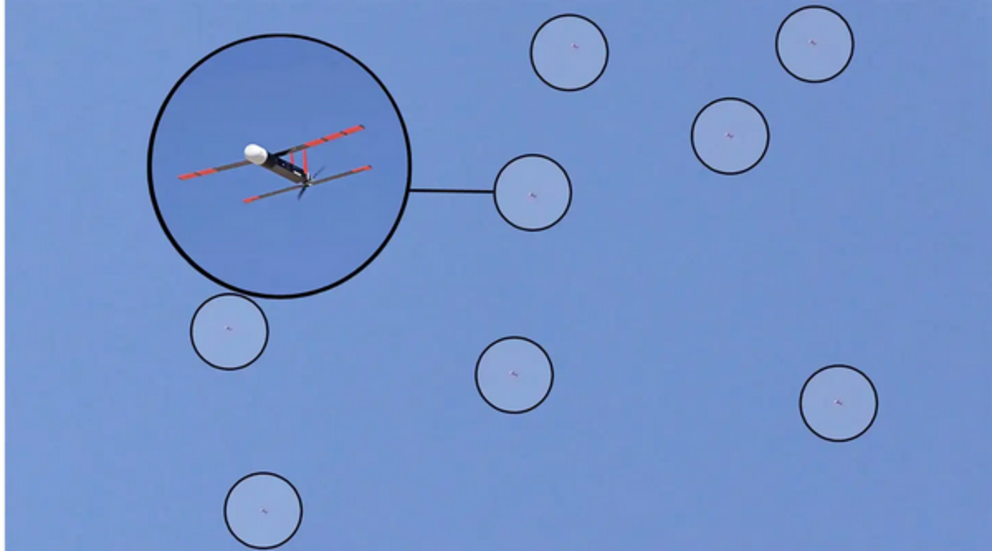
USN Screencap
After years of not taking the threat from drones seriously, the Pentagon is trying to play catch up, including weaponizing swarm technology for their own uses across the services. Here is a screengrab from swarming test of Coyote drones.
The gross inaction and the stigma surrounding unexplained aerial phenomena as a whole has led to what appears to be the paralyzation of the systems designed to protect us and our most critical military technologies, pointing to a massive failure in U.S. military intelligence. This is a blind spot we ourselves literally created out of cultural taboos and a military-industrial complex that is ill-suited to foresee and counter a lower-end threat that is very hard to defend against.
Before I move forward, I must state that just because I believe the evidence is compelling that many of the bizarre encounters with mysterious objects in the sky as of late, and especially those that the U.S. military is experiencing, emanate from peer-state competitors, not another dimension or another solar system, there are certainly well-documented cases of seemingly unexplainable events that have nothing to do with this type of capability. In other words, our conclusions do not come even close to answering the question of UAPs or UFOs as a whole, especially in terms of the many unexplained incidents in decades past. What they do is highlight an alarming new capability set and tactics that seem to have been allowed to be exploited with little response for years while the Pentagon scratched its head and shrugged, or even worse, turned largely a blind eye toward it.
And that brings us to one of the biggest problems with this topic, as a whole—people expect one blanket and grand explanation for the entire UFO mystery to one day emerge. This is flawed thinking at its core. This issue is clearly one with multiple explanations due to the wide range of events that have occurred under a huge number of circumstances. This thinking must be changed as it limits our ability to solve some mysteries in the hopes of coming up with some fantastical monolithic explanation for every related mystery. So, accepting that there is likely a wide array of explanations to this notoriously abused topic will be absolutely key to successfully studying it and destigmatizing it in our culture, and especially within U.S. military and intelligence circles.
With that in mind, I also believe America's prevailing cultural issues and the general stigma surrounding UFOs was successfully targeted and leveraged by our adversaries, which helped these activities to persist far longer than they should have. In fact, I believe that those in power who snicker about credible reports of strange objects in the sky and stymie research into them, including access to classified data, have become a threat to national security themselves. Their lack of imagination, curiosity, and creativity appears to have built a near-perfect vacuum that our enemies could exploit and likely have exploited to an astonishing degree.
A very enticing target
Nearly two years ago, I wrote a widely circulated piece that addressed my thoughts on the Pentagon's sudden willingness to talk about UFOs and its potential implications. I went through the possibilities as I saw them, but above all else, it was clear that this wasn't some over-hyped myth. Something strange was indeed going on.
Soon after, we were the first to connect key technologies that had emerged around the time that sightings of certain types of mysterious UAPs began to accelerate amongst military personnel—in particular, Navy fighter pilots. This was largely based around new air defense data-fusion and networking capabilities being installed on Navy warships and aircraft, as well as the proliferation of Active Electronically Scanned Array (AESA) radars on Navy fighters and airborne early warning and control planes. We also noted that the most remarkable appearances of these objects seemed to correlate with major Navy exercises where these advances in air defense capabilities were being fully integrated across a Carrier Strike Group. In other words, it seemed that these mysterious craft had a very keen interest in America's latest and greatest operational counter-air capabilities.

Harry S. Truman Carrier Strike Group. USN
We then got clarification from pilot witnesses on key claims about what they and their squadron mates had experienced before pursuing what was an inconvenient hypothesis for many—that at least some of what these aircrews and vessels were encountering were not an exotic unexplained phenomenon at all, but were in fact adversary drones and lighter-than-air platforms (balloons) meant to stimulate America's most capable air defense systems and collect extremely high-quality electronic intelligence data on them. And this is critical data, incidentally, that is very hard to reliably obtain otherwise.
These radar emissions, and the datalink communications that go along with them, underpin highly networked counter-air architectures that are unmatched anywhere on earth. By gathering comprehensive electronic intelligence information on these systems, countermeasures and electronic warfare tactics can be developed to disrupt or defeat them. Capabilities can also be accurately estimated and even cloned and tactics can be recorded and exploited. The very signatures of these waveforms alone can be used to identify, classify, and geolocate them by adversary platforms during a time of war, providing a big leg-up when it comes to battlespace awareness.
We are talking about everything from common operating frequencies to highly-sensitive low-probability of intercept emissions tactics, to datalink encryption, to distinct radar modes and employment procedures here. In other words, this is among the most critical intelligence a peer-state enemy can obtain and there aren't many easy ways of doing it. Even in a war zone, where aircraft and their systems are operating potentially in the same general area as adversary intelligence-collection systems, using their full combat capabilities may be restricted to maintain the secrets of those critical capabilities. Proximity to the emitters in question and how long their emissions are exposed to an intelligence-gathering system is a major limitation, as well. Traditional espionage is another way adversaries look to gain information on these critical systems, as well, but nothing beats going out and actually sucking up the electronic signatures as best you can. Actually becoming the target of their interest takes the quality of intelligence collected to a whole other level.
Historic precedent
The beginning of making the case for drones and balloons being the culprit for much of the recent UAP activity came when we posted an entire historical precedent for very similar operations dating back to the development of the A-12 Oxcart spy plane and the advent of modern electronic warfare itself. In essence, during the early 1960s, the CIA launched radar reflectors on balloons off Cuba's coastline via a U.S. Navy submarine and employed an electronic warfare system called PALLADIUM that would trick the latest Soviet radar systems into showing their operators that enemy aircraft were rushing toward Cuban shores or doing all types of crazy maneuvers. This coaxed the Cuban air defense system and its radars to light up and spurred rapid communications between air defenders on the island.
The balloon-borne radar reflectors of different sizes also showed up on the Soviet radars, and by monitoring the targets that the radar operators concentrated on, and thus could detect, it was determined how sensitive their Soviet radar systems actually were. This provided critical information on the survivability of the Mach 3+ and somewhat stealthy A-12, but beyond that, it set a precedent of how electronic warfare and airborne targets could be used to prod an enemy's air defenses so that critical intelligence as to their capabilities could be determined—all without actually putting a pilot in the air at risk.
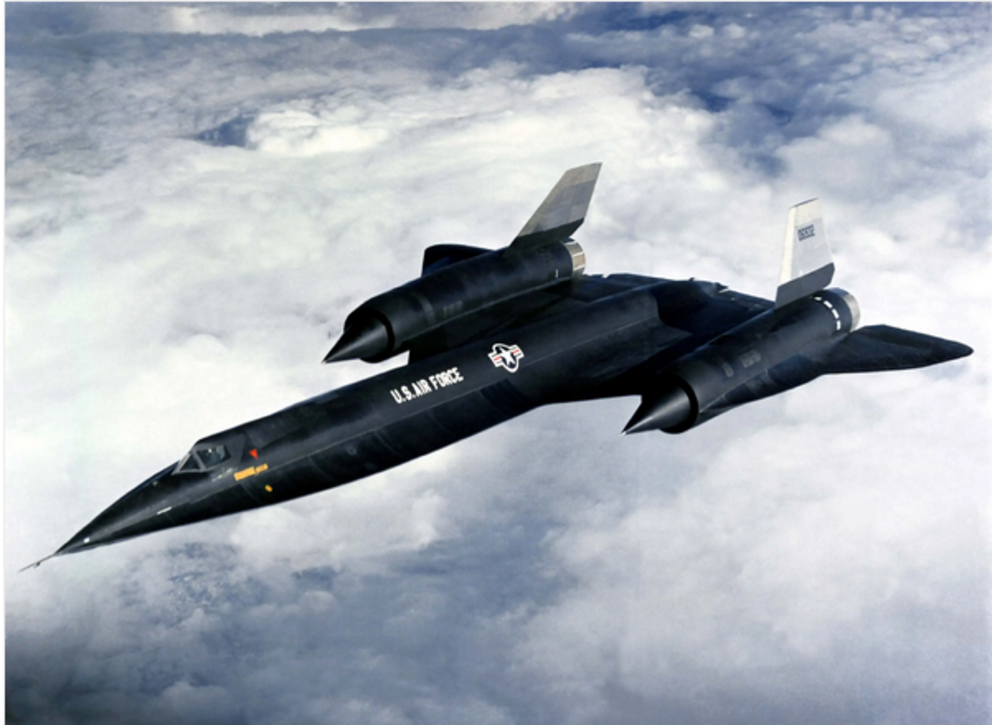
A-12 Oxcart, the Skunk Works' predecessor to the SR-71. USAF
That was just the start of these types of operations. As the decades went by, far more complex and capable integrated air defenses began proliferating throughout the globe, placing a greater need on collecting this type of critical information. From what we understand, PALLADIUM evolved and subsequently spiraled into a far wider electronic intelligence gathering ecosystem, much of which is still highly secretive in nature and exists to this day.
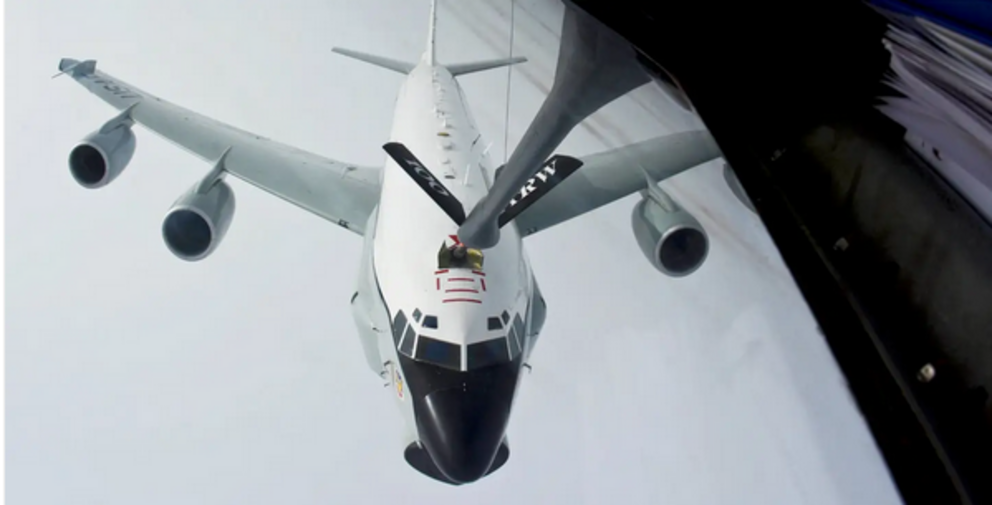
The U.S. has extremely capable standoff electronic intelligence-gathering aircraft, such as the U.S. Air Force's manned RC-135 Combat Sent and Rivet Joint, as well as the Navy's EP-3E Aries and P-8A Poseidon, not to mention U-2S Dragon Lady and unmanned RQ-4 Global Hawk, that are all capable of building up a picture of the enemy's electronic order of battle from a distance. Even America's top fighter aircraft are increasingly equipped with digital electronic warfare suites including highly advanced electronic support measures (ESM) that can provide tactical electronic intelligence of very high quality. Other countries, such as Russia and China, possess electronic intelligence (ELINT) gathering aircraft types, as well, albeit without the same level of capabilities or, in some cases, the same international reach and persistence.
USAF
The RC-135U is especially well equipped to build up a regional electronic order of battle on a potential adversary, but it can only do so outside of said adversary's sovereign airspace. Still, they have been known to make runs toward those boundaries in the hope of stimulating the air defense network they are trying to surveil.
While the United States also has very advanced, stealthy assets that can penetrate into enemy airspace to collect electronic intelligence data of a totally different fidelity, right near the emitters themselves and over long periods, America's adversaries do not, at least not yet. They have also historically lagged behind the U.S. government in space-based ELINT systems, which offer another way to scoop up emissions coming out of denied areas, and do so discreetly. This leaves America's potential foes to have to get more creative in order to obtain this critical information.
So, for the time being, even though exquisite stealth unmanned aircraft may be out of their reach, swarms of lower-end drones and other less-advanced unmanned airborne platforms certainly are not. And regardless of America's own stealth capabilities, one would be remiss if they were to believe that clandestine operations, such as the one using PALLADIUM 60 years ago, aren't still going on today. In fact, we know the use of balloons strapped with payloads to collect vital intelligence continued throughout the Cold War.
While manned overflights of the Soviet Union ended with the U-2 crisis in May 1960, high-altitude balloons continued to float across Soviet and Warsaw Pact borders for decades to follow. Unsurprisingly, this activity was conducted covertly, but continued even after the advent of spy satellites. For the Soviet Air Defense Forces in particular, the balloons were a significant menace, proving especially hard to defeat. There is evidence that at least some Soviet fighter units maintained gun-armed interceptors at round-the-clock readiness specifically to shoot down the intruding balloons and one aircraft, the M-17 Mystic, was even developed to carry out this particular mission, although it never entered service in this role. The Russians surely took note of this unique intelligence-gathering application.
Fast forward to the 21st Century, and revolution in lower-end unmanned aircraft has provided the perfect attritable platform—one robust enough to carry out the task, but low-cost enough so that it wouldn't matter if it got lost in the process—for just such a mission set. And, as we explained in great detail, so are balloons carrying radar reflectors and expendable electronic intelligence and even electronic warfare payloads. Whereas 60 years ago, electronic warfare systems may have required an entire plane or a large pod on a plane, today totally expendable electronic warfare systems that can wreak havoc on radars and other air defense nodes can be dropped out of a chaff and flare dispenser or be housed in the tip of a small missile—or flown on a balloon or lower-end drone.
For the rest of this article please use source link below