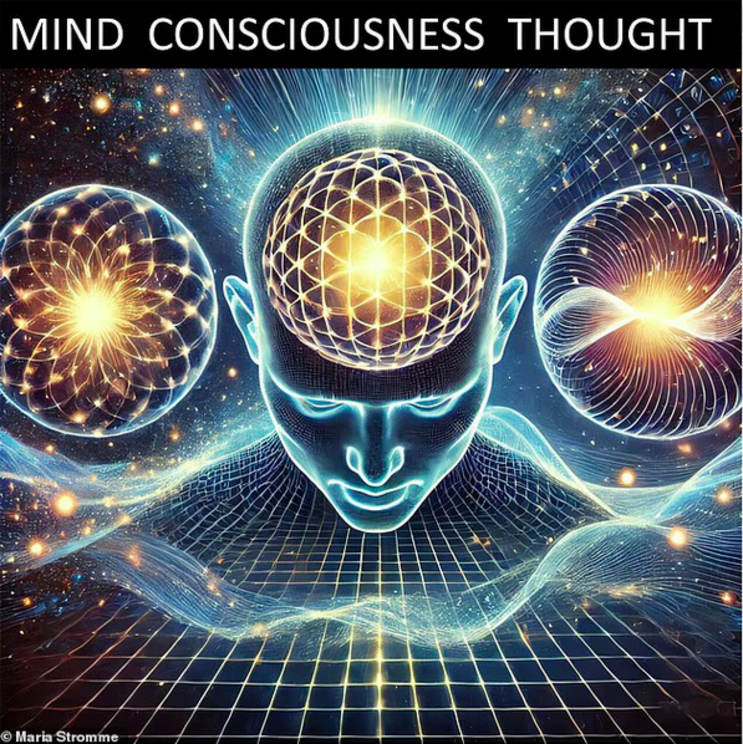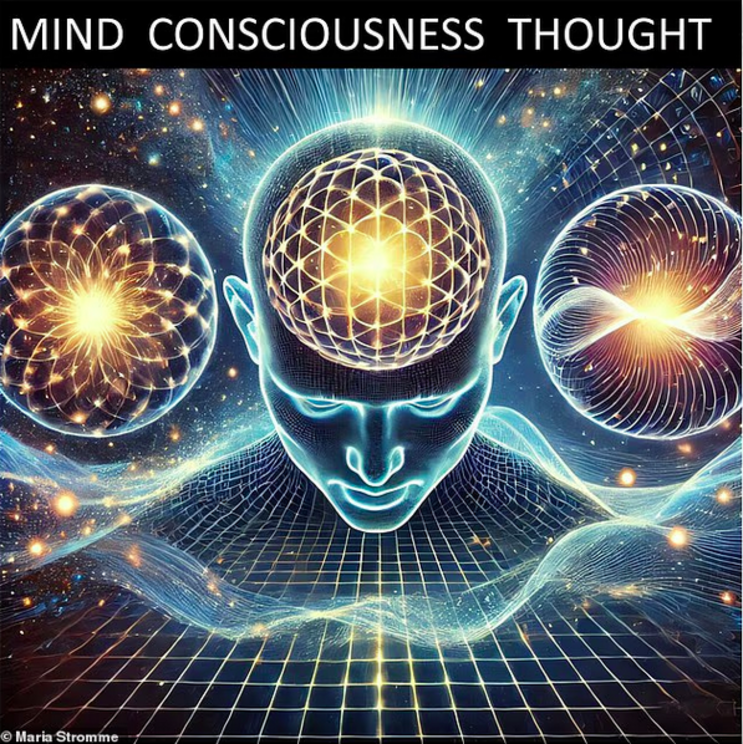
Physicist proposes radical new theory of consciousness - and it could finally explain what happens when you die
Consciousness does not emerge from human brains, according to Professor Maria Strømme, a professor of nanotechnology at Uppsala University.
Instead, she claims that it exists as a fundamental field - a 'building block' of the universe.
If this is correct, 'mysterious' phenomena such as telepathy, near–death experiences, and even life after death could finally be explained by science.
According to Professor Strømme's theory, consciousness does not end when we die.
Instead, when a person passes away, their consciousness simply returns to the background field.
Speaking to the Daily Mail, Professor Strømme explained: 'The possibility that consciousness is fundamental has been under–explored. But that is changing rapidly.
'We are reaching a point where asking deeper questions about consciousness is not philosophy on the margins — it is becoming a scientific necessity.'
According to more traditional theories of quantum physics, particles and energy all emerge from vibrations in a fundamental field – like how waves emerge from vibrations in water.
Professor Strømme now claims that this fundamental field might be consciousness itself.
If this is true, there would be radical consequences for our view of reality.
Perhaps most shockingly, if this theory is correct, the separation of our individual consciousness is simply an illusion.
Professor Strømme told the Daily Mail: 'In the model, individual consciousness is understood as a localised excitation or configuration within a universal consciousness field — much like a wave on the surface of an ocean.
'A wave has a form that is temporary, but the water that carries it does not vanish when the wave subsides.'
What's more, the theory suggests that consciousness does not end when we die, and instead, it simply returns to the background field.
'The fundamental substrate of awareness does not begin or end with the body, just as the ocean does not begin or end with the appearance of a single wave,' says Professor Strømme.
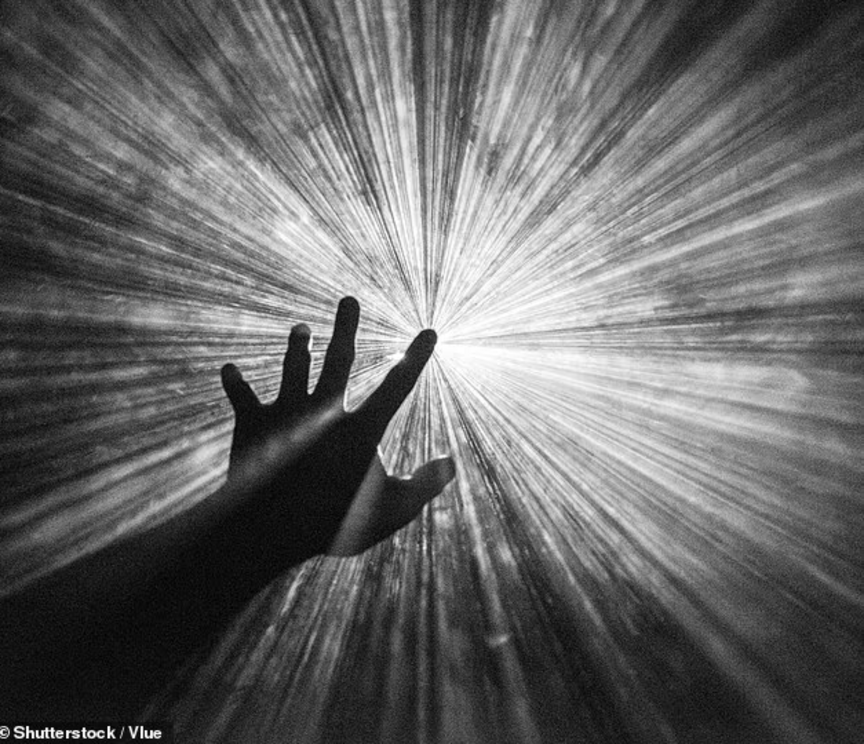 According to this theory, all individual consciousnesses are part of one fundamental field. This means the anomalous visions seen during near–death experiences could be due to 'atypical access to that underlying field'
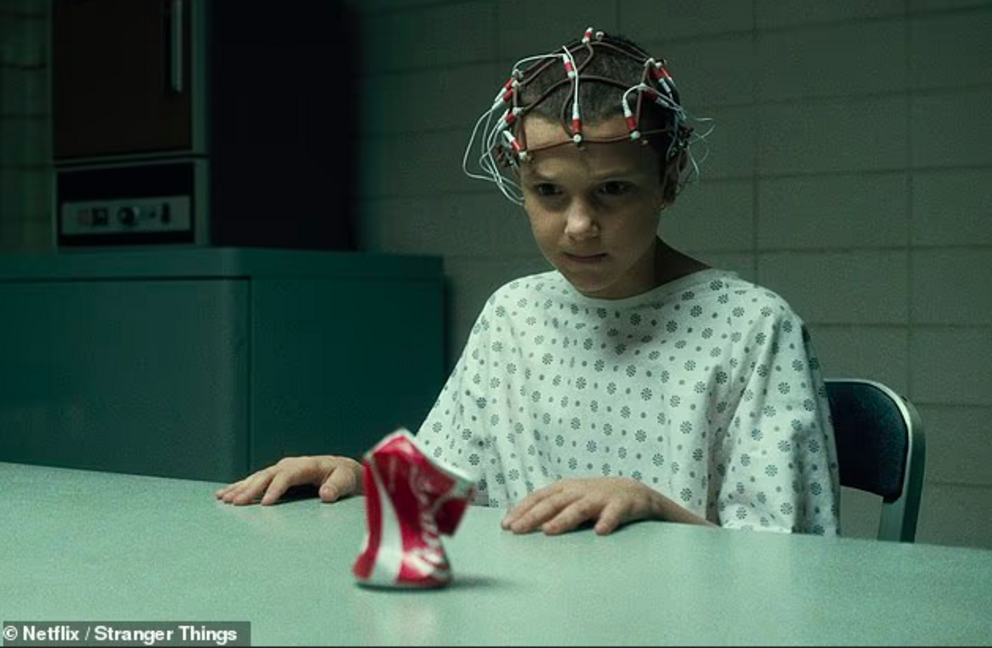 According to Professor Strømme, telepathic abilities, like those seen in Stranger Things (pictured), could be explained by consciousness being the fundamental basis of reality
Schrödinger's cat thought experiment
In the famous Schrödinger's cat thought experiment, a cat is placed in a box with a vial of poison that is only opened if a radioactive particle randomly decays.
According to quantum physics, the randomness of the radioactive decay means the cat is both alive and dead until we open the box and take a look, at which point it switches into one of the two options.
Scientists have struggled to explain how human consciousness could trigger something like Schrödinger's cat to change from one state or another.
However, if consciousness really is a fundamental part of reality, then we would expect our minds to interact with the world around us in this way.
This also means that many phenomena dismissed as pseudoscience could be part of the scientific model and 'deserve renewed, rigorous scientific testing', according to the expert.
For example, during near–death experiences, many people report having visions of religious figures, lost loved ones, or even premonitions of future events.
'If individual awareness is not generated only by the brain, but is an expression of a deeper field, as my model suggests, then moments when the brain is impaired could allow atypical access to that underlying field,' says Professor Strømme.
Likewise, the model suggests that psychic abilities such as telepathy may not only be real, but also scientifically testable.
Since all individual consciousnesses are part of the same field, information can be transmitted between points that are apparently separated by space or even time.
That means individuals who are specifically gifted or in altered states of consciousness may be able to read minds or see visions of distant events.
'This would explain why telepathy–like phenomena appear across cultures and throughout history, even though the empirical evidence so far is controversial and not yet conclusive,' says Professor Strømme.
If her theory is true, the brain states of those in deep meditation or 'emotional attunement' should show evidence of 'synchronising' with other people's brain activity.
For the rest of this article please use source link below