
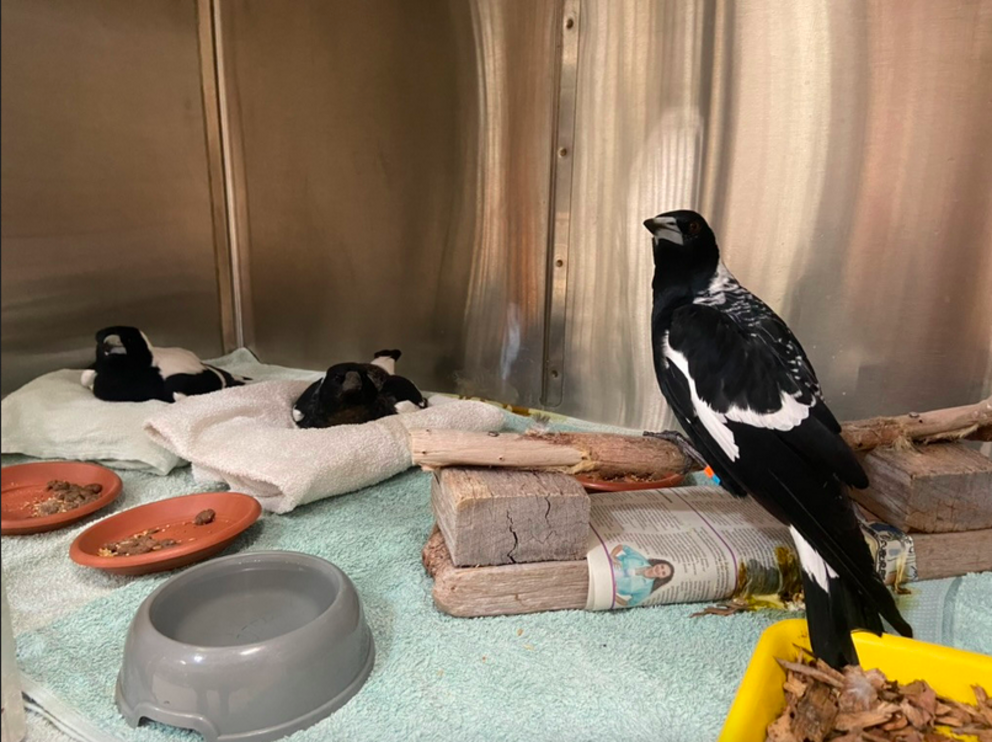
Magpie Paralysis Syndrome – Update for the community
Over the last spring-summer season, wildlife hospitals and rehabilitators across Perth and the South West responded to an unprecedented number of Australian magpies showing neurological symptoms such as weakness, ataxia and paralysis. Murdoch University, WA Wildlife and partner organisations have been working together to investigate this emerging condition.
What we know so far:
A detailed investigation was recently carried out using 11 affected birds and 3 unaffected birds. Testing included molecular studies for known and unknown pathogens, screening liver samples for ~250 environmental contaminants and full post-mortem pathology.
Key findings from the 2024–25 season:
• DPIRD have screened enough cases to make it extremely unlikely that any notifiable disease (including avian influenza or Newcastle disease) is involved.
• Botulism type C/D has not been detected in any of the above samples.
• Glyphosate was not detected in 10 affected birds and 1 unaffected bird tested.
• Low levels of legacy pesticides and some heavy metals were found in both affected and control birds, with no differences between groups.
• Pathology results have highlighted several areas requiring further investigation.
• Some disease agents have been identified, but more work is required to determine whether they are linked to the syndrome.
What we still don’t know:
A definitive cause has not yet been identified. Blood parasites and insect-borne viruses are the current priorities, but the cause remains open.
Next steps:
The next phase of the investigation will include:
• Collecting additional samples from unaffected control birds
• Repeating selected diagnostic tests based on a refined list of possible causes
• Standardised data collection across wildlife centres during the current season.
This investigation required significant resources. The total cost of the study was approximately $80,000, and around 350 hours of in-kind labour were contributed by WA Wildlife and Murdoch University.
We sincerely thank NMI laboratories, DPIRD, the wildlife centres and volunteers who cared for affected birds and those who contributed financially to the investigation (Darling Range Wildlife Shelter, Kanyana Wildlife, Perth Wildlife Hospital, WA Wildlife), private donors and particularly Murdoch University for their research support. This work would not have been possible without their combined effort.
Investigations into syndromes that cause paralysis in wildlife can be extremely complex and resource-intensive. This investigation is ongoing and may take multiple seasons. We'll continue to share updates as new information becomes available.
What to do If you find an affected bird:
• For live magpies showing neurological symptoms, call the Wildcare Helpline on (08) 9474 9055 or take the bird to a wildlife hospital or rehabilitator.
• If five or more sick or dead birds are found in one area, report this to the Emergency Animal Disease Hotline on 1800 675 888.
• Please do not collect deceased birds unless specifically requested — structured sampling is required.