
City birds are more scared of women than men and researchers can’t figure out why: study
That’s a fowl way to treat a lady.
City birds across Europe appear to be more scared of women and fly away from them faster than they do from men — and scientists can’t explain why, according to a recent study published in People and Nature.
Researchers across France, Germany, Poland, Spain and the Czech Republic spent the spring of 2023 tracking more than 2,500 birds across the five countries and walking straight at them in urban parks to record how close they could get before the animals flew off.
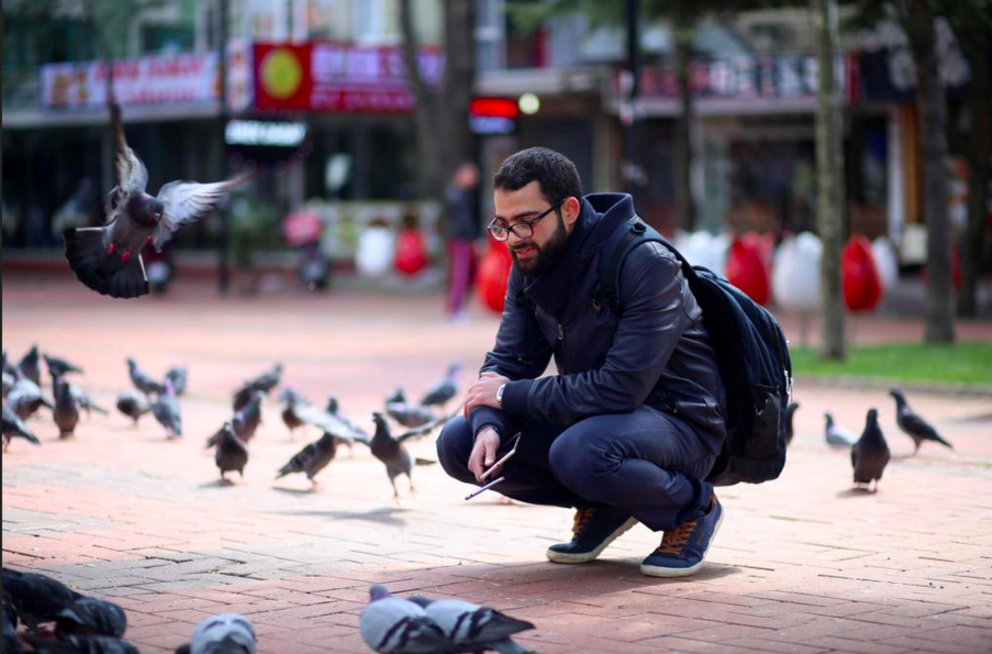 City birds across Europe are scared of girls and bolt from women sooner than they do from men, a new study claims. asem arab – stock.adobe.com
What they discovered, according to the study, was that across nearly 40 species of birds, regardless of gender, all consistently let male observers approach them roughly one meter closer than they let women observers, on average, before taking off, the study detailed.
“We found that the sex of human observers consistently influenced bird escape behaviour — birds were less tolerant of women than of men, and this result was geographically consistent,” the conclusion of the study read.
After discovering the phenomenon, researchers went out of their way to rule out the obvious explanations.
Both male and female observers were matched in height, wore similarly colored clothing and tucked away their hair, but none of it mattered, as the birds still consistently bailed on women who approached them first, leaving scientists completely stumped.
 Researchers discovered birds consistently let male observers approach them roughly one meter closer than they let women observers, on average, before taking off. rh2010 – stock.adobe.com
“Considering that men were traditionally considered hunters and women as gatherers in human societies — and as demonstrated by a long exposure to different threats should promote adaptive heritable behaviour in birds, we expected that birds would perceive men as more threatening than women,” the report said.
“However, our results challenge the potential long-lasting heritability of escape responses to humans concerning how threatening humans are to birds,” the report added.
 “Birds were less tolerant of women than of men,” the study concluded. Jessica – stock.adobe.com
As for why the birds were spooked by women, the researchers have come up with some minimal theories, but so far have no concrete answers or explanations.
One possibility could be the way men and women move. Despite the observers’ best efforts to look alike, birds may still be picking up on subtle differences in stride, posture and hip movement between the sexes.
Another possibility scientists gave is scent, though birds have long been thought to have a weak sense of smell and researchers were skeptical of that theory.
“The causal mechanisms remain unclear, but the results underline the sophisticated evaluation by birds of their environment, and that subtle differences in human observers could influence important reactions by the subjects of study,” researchers said.