
What fingerprints tell us about Jerusalem’s ancient artisans
In an unusual collaboration, archaeologists in Israel are working with police to analyze prints left on fifth- or sixth-century pottery shards
Israel isn’t the first country where fingerprints found during archaeological research have elicited curiosity and spurred questions about who left them behind. Illustration by Meilan Solly / Photos via Dafna Gazit and Shay Halevi / Israel Antiquities Authority, Vecteezy
On a chilly, rainy afternoon in September 2020, two Israeli police cars and a motorcycle, their red lights flashing and sirens blaring, pulled up to an archaeological dig in Motza (or Moza), a neighborhood in the mountains west of Jerusalem.
Four police officials emerged from the vehicles and approached the excavation—but they weren’t responding to a crime. They’d come to examine ancient fingerprints as part of an unconventional, ongoing collaboration between Israel’s police department and the Tel Moza Expedition Project team.
Beginning in November 2019, excavations at the three-acre site uncovered traces of structures and artifacts from the early Byzantine period (the end of the fourth century to the beginning of the seventh century): a church, an olive press, a wine press and a kiln. An alcove adjacent to the kiln contained clay fragments of lamps and roof tiles, with remnants of jugs and bowls lying nearby.
Featuring images of palm trees, the lamp fragments caught the attention of Shulamit Terem, an archaeologist and ceramics expert at the Israel Antiquities Authority (IAA). More than one-third of the 230 shards were covered in centuries-old fingerprints.
“It was striking,” Terem says. “There were so many, and they were so clear.”
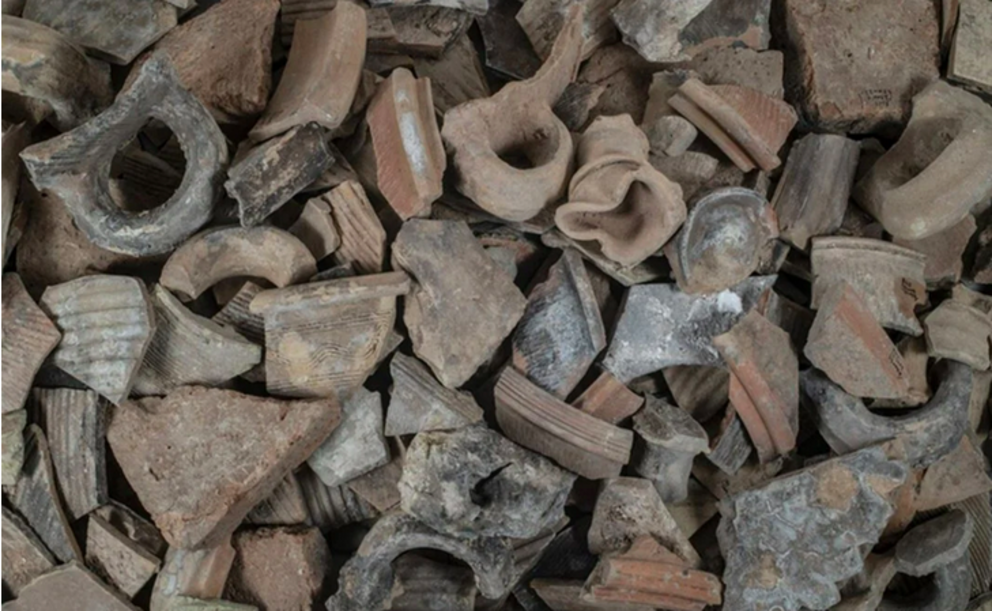
More than one-third of the 230 shards were covered in centuries-old fingerprints. Dafna Gazit and Shay Halevi / Israel Antiquities Authority
The fragments’ proximity to the fifth- or sixth-century kiln led Terem and her colleagues to theorize that the fingerprints belonged to the kiln’s worker (or workers), who’d made the lamps from molds. To learn more details, from how many potters worked at the site to the artisans’ age and gender, the archaeologists turned to police investigators—experts on the science of fingerprints.
The outreach wasn’t so far-fetched. Detectives and archaeologists share an intense inquisitiveness, a devotion to facts, attention to detail and a focus on clues found in a specific place. Police labs possess cutting-edge machinery and technology used to analyze fingerprints. Yet the Israeli teams say their collaboration is the first of its kind to date.
“As an archaeologist looking at the lamp, I saw only fingerprints. I didn’t see any more than that,” Terem says. “I wanted to know more about the people of the past. The police could help me understand more and draw more conclusions about life in Motza in Byzantine times.”
The archaeologists’ dig preceded the construction of a highway overpass. Archaeological oversight, and sometimes excavation, is mandatory at many building sites in Israel, a country that juggles the present and past, where construction cranes are ubiquitous and the land’s history is cherished. The Motza project was part of a far larger excavation begun in 2017, with notable finds including a town populated by demobilized Roman soldiers who’d conquered Israel in the year 135. Other discoveries dated back to the Neolithic period.
Ido Hefetz was surprised to be summoned to Motza from police headquarters in Jerusalem, where he’s a fingerprint examiner in the forensics division. One of the lab’s four experts in this field, Hefetz specializes in prints left at crime scenes and testifies at up to 15 trials annually.
He’d never been personally approached by the IAA before, but the agencies have collaborated over the years. In an ongoing project, the antiquities authority is combing a 1948 Arab-Israeli War battle site involving 35 Israeli fatalities near Beit Shemesh. In 2007, the IAA investigated a World War I-era weapons cache buried under an abandoned police station in the coastal city of Jaffa.
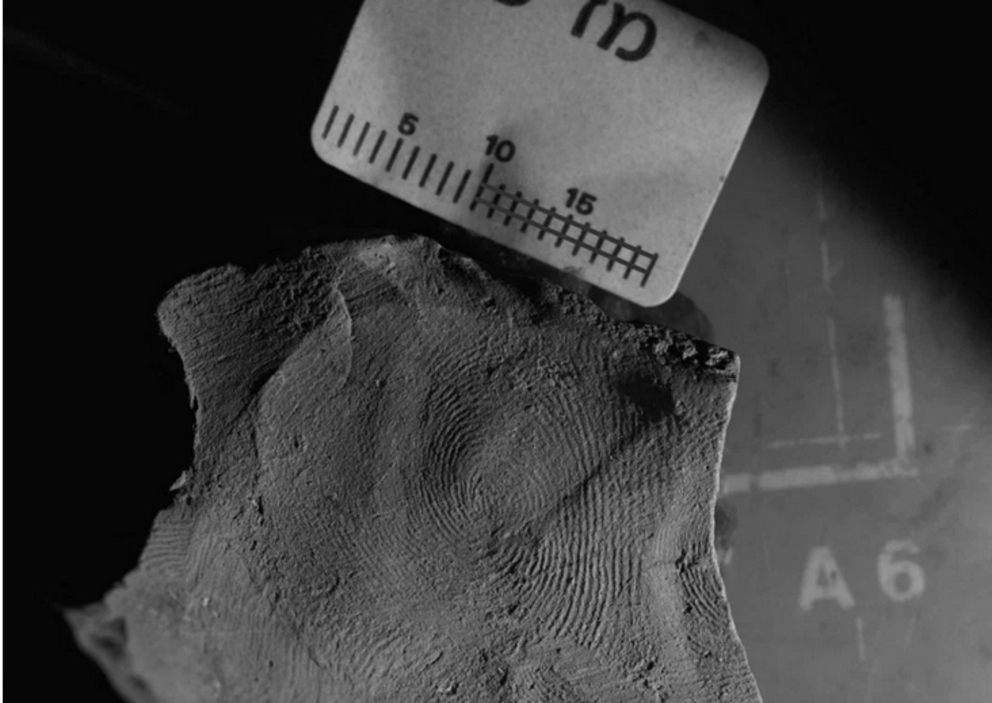
Scores of the fingerprints were identical, leading Hefetz to conclude that one individual was the primary potter. Nora Rajs / Division of Identification and Forensic Science, Israel Police
Israel isn’t the first country where fingerprints found during archaeological research have elicited curiosity and spurred questions about who left them behind.
In 2019, an analysis of fingerprints on vessel fragments unearthed in the southwestern United States concluded that both men and women produced pottery in a 10th- and 11th-century Puebloan community. Going back much further in time, a 2020 analysis of fingerprints found on 7,000-year-old Spanish cave paintings revealed that a man in his mid-30s and a girl as young as 10 years old were likely among the artists.
John Kantner, an archaeologist at the University of North Florida who led the Pueblo project, first learned of fingerprint analysis’ applications in archaeology when one of his students, a former police officer, wrote his thesis on the topic nearly two decades ago.
“It opened up a whole world for me,” Kantner says.
Though archaeologists have been studying fingerprints since at least the 1930s, Francisco Martínez-Sevilla, a historian at the University of Alcalá in Spain who co-wrote the cave painting study, says the technique has only “become more common in the past ten years.”
“People now know the potential of this methodology,” he adds, highlighting the technique’s ability to determine someone’s sex and age. The greater the ridge density in a fingerprint, the more likely it belongs to a woman; less density indicates the person was male. As individuals grow older, the distance between the ridges in their fingerprints increases.
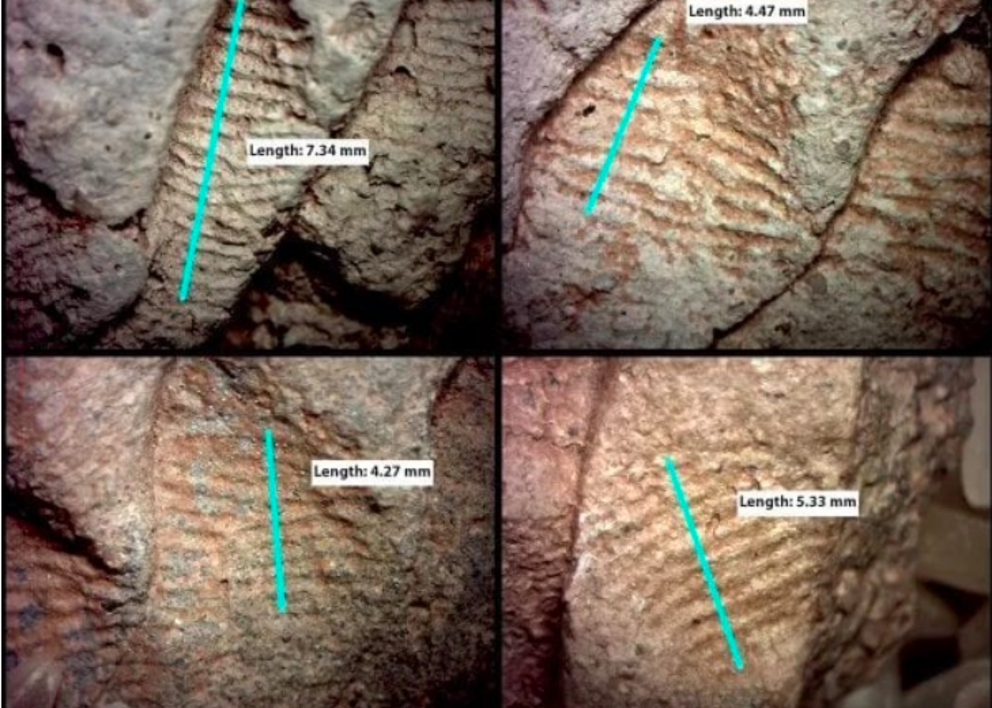
Fingerprints found on pottery shards unearthed in the southwestern United States University of North Florida
Julie Hruby, a classicist at Dartmouth College who has studied ancient fingerprints, sees the value of employing forensics (defined broadly as using scientific methods or expertise to investigate crimes or examine evidence) to examine antiquities.
“I would advocate for cross-training between archaeology and forensic science,” Hruby adds. “Often, we are asking the same questions for different reasons. For example, archaeologists might wonder about how [pottery] workshops function, and training in fingerprint analysis can answer that question.”
For the rest of this article please use source link below