Pahon Cave provides a look into 5,000 years of surprisingly stable Stone Age tool use
The Pahon Cave in Gabon offers archaeologists a well-preserved look into the Late Stone Age time period in central Africa, thanks to the stratified layers of guano-based sediment. This is in contrast with much of the surrounding areas, which are rich in acidic soils that make preservation difficult.
A new study takes a deep dive into the findings of the two test pits in the Pahon Cave, which recovered 1,131 lithic artifacts and 1,045 faunal remains. The new study is published in the journal PLOS One.
Different millennia, same tools
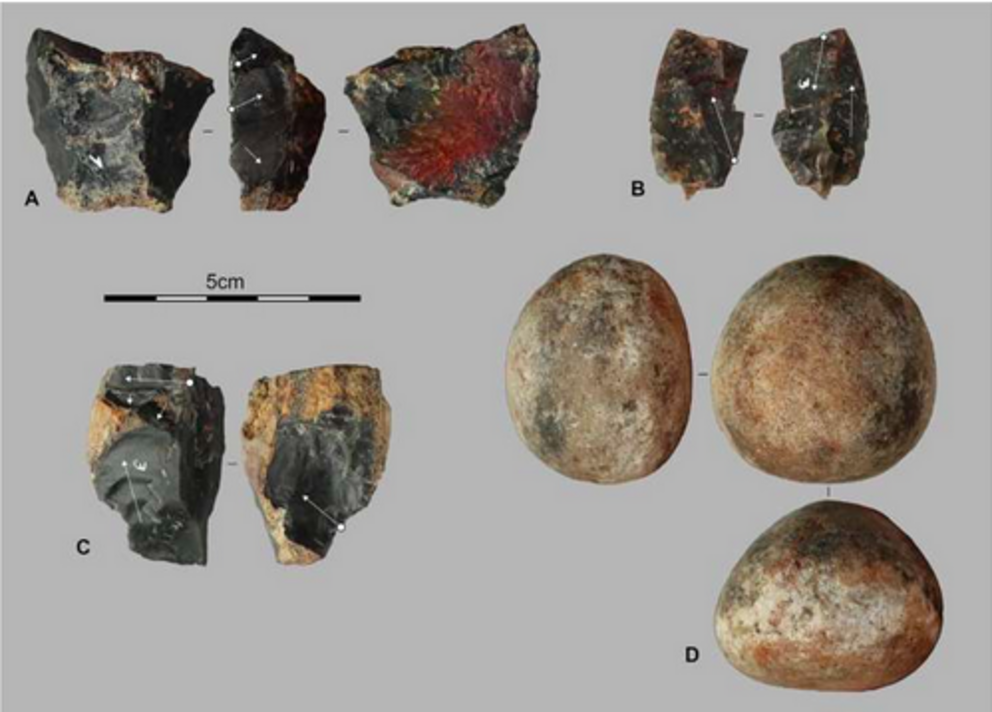
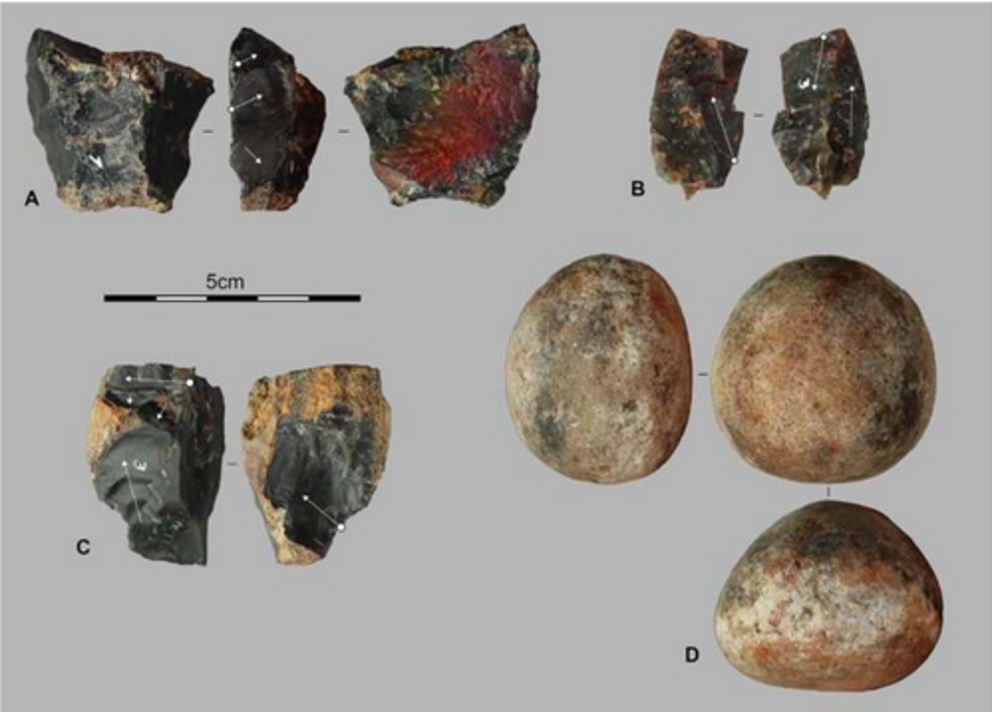
The Pahon Cave site is separated into five stratigraphic layers, covering a chronological period ranging from 7,427 BP to 2,724 BP. Of the 1,131 lithic objects unearthed in the cave, only 985 were analyzed. And out of these, 88% were classified as waste flakes—chips and sharp fragments of stone left over from the manufacturing or repair of stone tools. A hammerstone and fragment of a polished ax were also recovered, with the ax fragment providing evidence for an early date in the development of stone polishing in Atlantic Central Africa, according to the study authors.
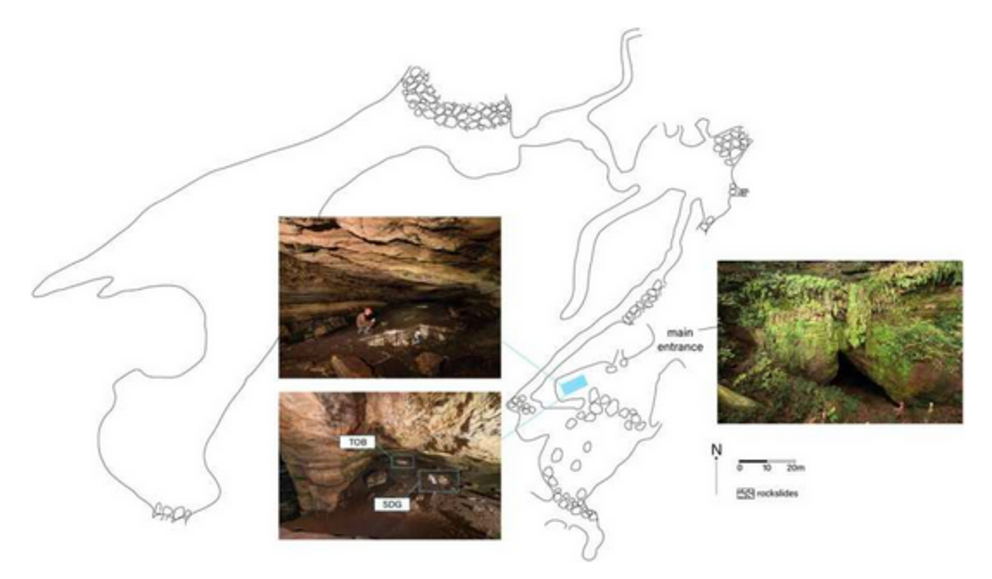
Pahon Cave. View of Pahon Cave entrance where has been excavated the two trenches—Photos from Serge Caillault. Credit: Angue Zogo et al., 2025, PLOS One, CC-BY 4.0 (creativecommons.org/licenses/by/4.0/)
A more striking finding was that the stone tool technology found in the cave remained stable and simple for over 5,000 years, with little evidence of standardized or specialized tool types. By categorizing the pieces by flake morphology and analyzing use-wear, the team was able to unveil insights into the evolution—or lack of evolution—of tool use over the period. They note that features of the tool fragments and materials used were generally homogeneous throughout the 5,000-year period.
The study authors write, "Our study, based on a technological analysis, reveals a complete—though relatively simple—lithic operational sequence, characterized by unretouched, low-standardization stone flakes, often used as unmodified tools. This is a lithic industry that does not conform to the classical typology and instead reinforces the hypothesis of the diversity of Holocene lithic technical behaviors in Central Africa.
"Contrary to conventional views that associate the Holocene with complex and standardized production schemes, the industries from the Pahon Cave exhibit highly flexible technical systems, marked by variability and simplicity in both application and knapping know-how."
Giant snails, bushpigs and porcupines: A neolithic diet
Among the findings at the Pahon cave were 1,045 animal remains. Although many appeared to be from animals that died naturally in the cave, some appeared to be human food waste. The study authors note that the food waste from humans using the cave as shelter mostly consisted of giant snail remains and remains of small to medium-sized animals, such as porcupines, bushpig and antelope.
Bats were among the most common finding in the cave, of which the study authors say, "No less than 93% of all identified faunal remains are from large bats that typically inhabit caves. Fruit bats of the genus Rousettus are only found in trench SDG in which giant roundleaf bat (Macronycteris gigas) is also represented, albeit in smaller numbers.
"In trench TOB, somewhat deeper in the cave, the giant roundleaf bat is the sole bat species. Although it is known that large bats can be captured for food, usually with the aid of nets, we believe that the remains found in Pahon Cave represent mainly, if not exclusively, animals that died naturally."
Overall, the sample size is small, and there are still questions about what caused the eventual decline of stone tool use in the region. Future microscopic use-wear studies and additional excavations in the cave or nearby areas can provide further insights.
Edited by Gaby Clark, reviewed by Robert Egan