
Neanderthal women and children were the victims of selective cannibalism at Goyet, study reveals
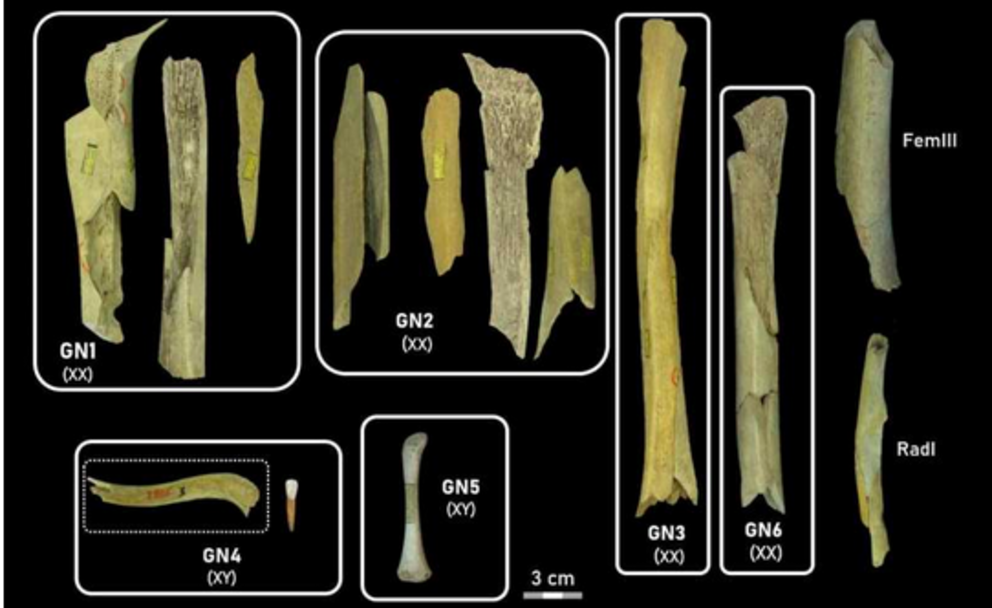
The study of an assemblage of Neanderthal human bones discovered in the Troisième caverne of Goyet (Belgium) has brought to light selective cannibalistic behavior primarily targeting female adults and children between 41,000 and 45,000 years ago.
The biological profile of the victims, identified for the first time, reveals that they were part of a group originating from outside of the local community, and they were probably brought to the site where to be consumed for food rather than in a ritual context, as suggested by the presence of traces similar to those found on animal bones hunted, butchered and consumed by occupants of the Goyet site.
The research, which has just been published in Scientific Reports, was conducted by an international team including researchers from the CNRS, l'Université de Bordeaux, and l'Université d'Aix-Marseille.
Situating these analyses in the context of the late Middle Paleolithic—marked in Northern Europe by great cultural diversity within Neanderthal groups and the emerging presence of Homo sapiens in nearby areas—such cannibalism directed at specific outsiders could reflect the existence of territorial tensions between groups that preceded the disappearance of Neanderthals in the region.
These conclusions are based on ten years of research involving a reassessment of the Goyet collection through DNA analysis, radiocarbon dating, and isotopic measurements to determine the geographic origin of individuals, in addition to virtual reconstitutions enabling morphological analysis of sometimes very fragmentary human bones.
By Elisa Doré, CNRS
Edited by Gaby Clark, reviewed by Robert Egan