
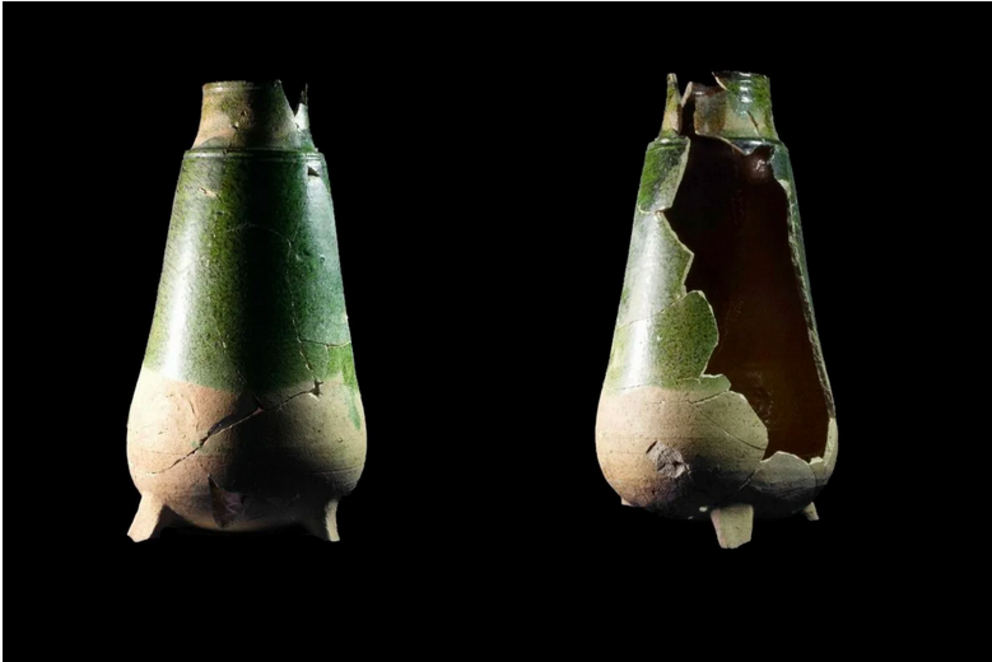
Evidence of alchemy discovered at Gnandstein Castle
Archaeologists working at Gnandstein Castle in Germany have uncovered a rare distillation vessel that may point to alchemical activity at the medieval stronghold during the 15th or 16th century.
The discovery was made during construction-related investigations overseen by the State Office for Heritage Management (LfA). Although the castle underwent extensive renovations between 1994 and 2004, archaeological work continues as modern construction projects are carried out within the historic complex.
The latest excavation focused on an area of around 225 square metres near the demolished westwork of the castle, where a new technical room was being installed. While the site had been disturbed by previous construction activity, archaeologists still uncovered a brick pavement measuring approximately 30 square metres, believed to be part of an early modern floor. Partially green-glazed floor tiles dating to the early 16th century were also recovered.
Among the finds, one object stood out: a tall ceramic vessel with a steep neck and three feet, partially glazed green on the exterior and yellow on the interior. Dating to the 15th or 16th century, researchers identified it as a distillation flask used in alchemical or chemical processes.
The vessel would originally have been fitted with a domed head placed over the narrow neck. Vapours produced during heating condensed inside the apparatus and could then be collected separately.
Though alchemy is often associated with attempts to make gold, medieval and early modern alchemists were also instrumental in developing early chemistry, metallurgy and medicine. Distillation processes were used to make mineral acids such as sulfuric and nitric acid, herbal extracts, medicinal tinctures and distilled alcohol, commonly known as aqua vitae.
Ceramic and glass vessels were preferred for such work as modern practitioners believed metal containers could contaminate the substances being processed.
No chemical residues were detected in the Gnandstein flask so archaeologists were unable to determine exactly what substances were distilled in it. But the discovery gives us a glimpse at scientific and experimental work that may well have been carried out inside the castle walls.
Sources : State Office for Archaeology Saxony