Ancient stalagmite provides insights into how climate affected early communities in cradle of civilization
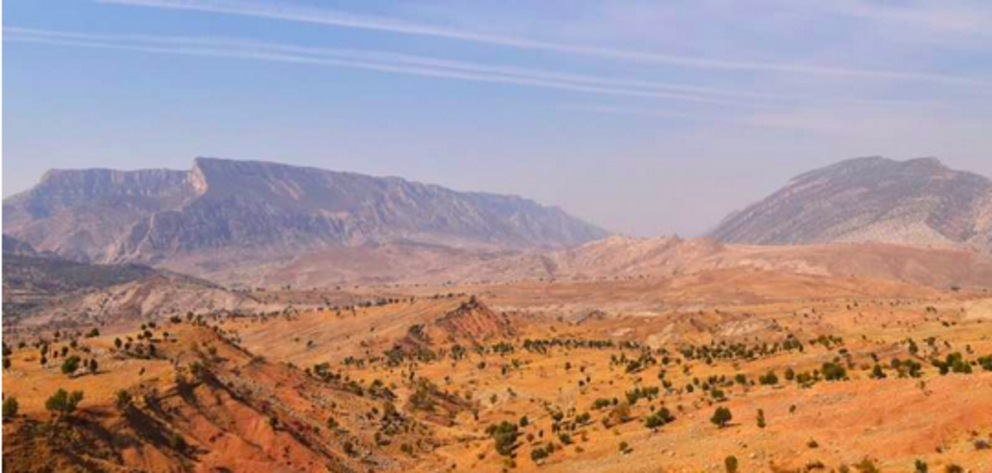
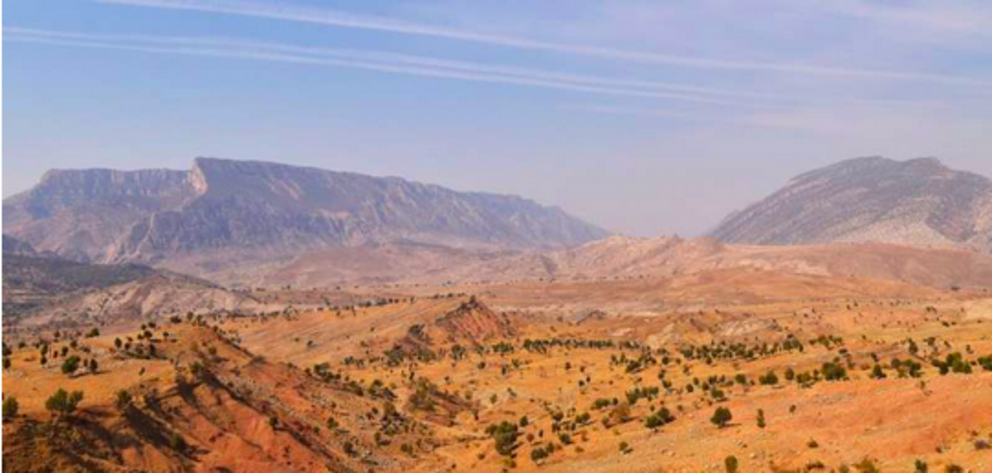
The Fertile Crescent, a boomerang-shaped region spanning modern-day Middle Eastern countries, is considered the cradle of civilization and where farming first emerged. But little is known about how climate change influenced early societies in this part of the world. Now, new research into ancient climate history is shedding light on how farming and civilization began. And the insights are coming from an analysis of a stalagmite in a cave in Kurdistan.
Stalagmites are fascinating structures that slowly rise from cave floors over thousands of years as rainwater seeps through soil and limestone bedrock, depositing layers of calcite. Locked inside these layers are chemical traces of past temperatures and rainfall.
The research examined the pivotal period between 18,000 and 7,500 years ago, spanning the end of the last Ice Age and the transition to the warmth of the modern Holocene era. This period overlaps with the shift from mobile hunting to settled farming, leading to the development of villages and, ultimately, cities. Uranium-thorium dating of the stalagmite showed it formed continuously over this period, providing scientists with a complete record of the local climate.
The study is published in the journal Proceedings of the National Academy of Sciences.
Climate diary
To access this record, the team analyzed the chemical composition of the layers, specifically oxygen and carbon isotopes and trace elements like magnesium and barium. Oxygen-18 isotopes primarily reflect rainfall, with lower values indicating wetter periods. Carbon isotopes reflect the health of vegetation and soil because warmer, wetter conditions promote greater plant growth.
Meanwhile, the trace elements are primarily used to detect periods of severe drought and when strong winds carried dust into the area. By combining all this information, the scientists built a picture of the ancient environment in the eastern Fertile Crescent.
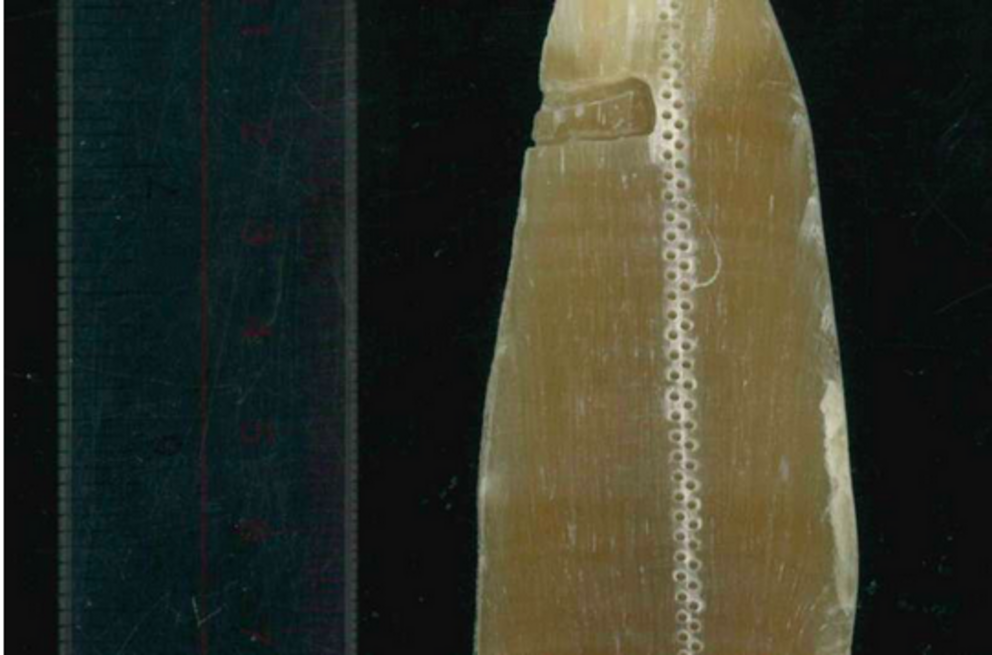 Sample of stalagmite KR19-3. Credit: Eleonora Regattieri
A challenging environment
The analysis revealed that local rainfall patterns closely matched global temperature shifts recorded in the Greenland ice cores. The stalagmite revealed that a major global snap known as the Younger Dryas period hit the Kurdistan region, causing severe drought, intense dust storms and reduced plant life. This explains why communities in the east developed differently from those in the west that settled before the drought.
The extreme, unstable climate of the eastern Fertile Crescent region meant people couldn't count on a regular food supply, so it wasn't a place to build a home. That's most likely why they remained mobile hunter-gatherers for longer.
However, the period of challenging environmental conditions may have prepared them for later, as the scientists write in their paper.
"The strong climate variability during the Bølling–Allerød (a warm period preceding the Younger Dryas), together with the intrinsic ecological heterogeneity of the Zagros ecosystem, fostered the accumulation of a wide and nuanced experience on how to respond to changes in resource distribution and availability at the microscale," explain the authors.
In other words, the constant need to adapt to an unpredictable environment made these eastern communities highly flexible and gave them the ability to find food and resources even when conditions changed rapidly.
Edited by Gaby Clark, reviewed by Robert Egan