
Ancient Egyptian scribes: The tools and education of the elite
Introduction: The Engine of the Nile
In ancient Egypt, literacy was the ultimate currency of power. While the vast majority of the population engaged in agricultural labor, a tiny elite group—estimated at less than 1% to 2% of the population—held the keys to the state’s massive administrative machinery. These were the scribes (sesh).
Scribes were far more than simple copyists; they were the bureaucrats, tax collectors, architects, judges, and military logisticians who kept the kingdom running smoothly for over three millennia. From measuring the annual rise of the Nile to calculating the exact number of grain sacks needed to feed a pyramid construction crew, the scribe’s pen was the true tool that built the empire.
1. The Scribe's Toolkit: Ancient Innovation
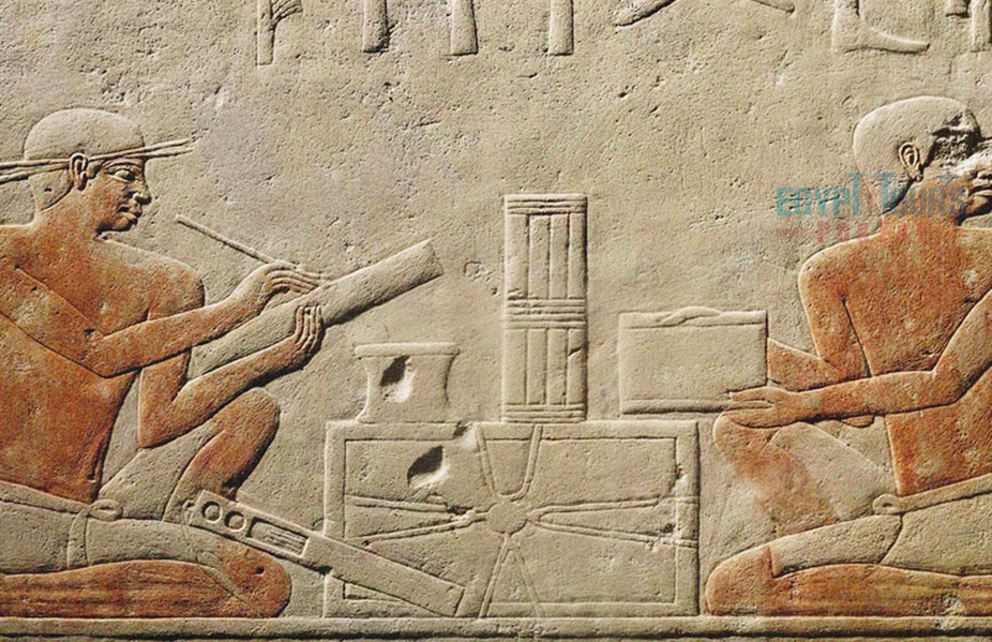
The tools of a scribe were so iconic that the hieroglyphic sign for "to write" or "scribe" was a literal drawing of their writing kit. A professional scribe carried a compact, highly efficient mobile office.
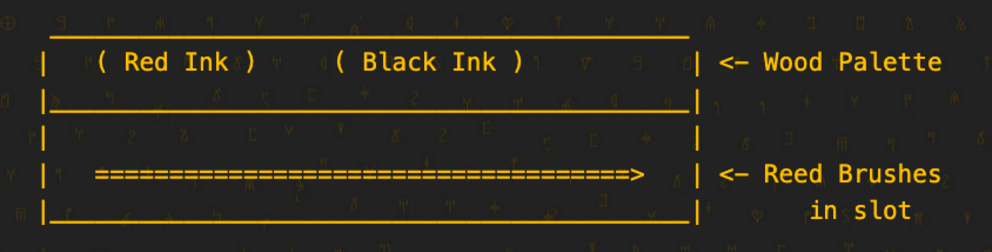
The Palette (Gesti): A narrow, rectangular piece of wood or ivory featuring a long central slot to hold reed pens and two circular depressions acting as inkwells.
The Two-Tone Ink System: Scribes used solid cakes of ink that functioned much like modern watercolors, requiring a drop of water to activate.
Black Ink: Made from carbon soot mixed with a light gum adhesive. This was used for the main body of text.
Red Ink: Formulated from cinnabar or iron-rich ochre. It was used strictly for titles, headings, structural breaks, and correcting mistakes—the ancient ancestor of the teacher's red pen.
The Pens: Prior to the Roman period, Egyptian scribes did not use split-nib quills. Instead, they used thin rush reeds (Juncus maritimus). The scribe would chew or fray the tip of the reed to turn it into a soft, brush-like point, allowing them to sweep elegant lines across a surface.
The Writing Surfaces: While official religious texts were painted onto tomb walls or premium papyrus scrolls, papyrus was expensive and time-consuming to manufacture. For daily drafts, student exercises, and tax receipts, scribes used abundant alternatives: limestone flakes and broken pieces of pottery called ostraka.
2. The Education: The House of Life
The path to joining this elite class was grueling. Training began at roughly five to seven years of age within specialized temple schools known as the House of Life (Per Ankh).
Education was grounded in strict memorization, rigorous dictation, and endless repetition. Students spent years copying classical literary texts, legal documents, and moral treatises over and over again to perfect their hand.
Discipline was unyielding. A popular school dynamic is captured in an ancient Egyptian proverb surviving on a schoolboy's ostrakon:
"A boy’s ears are on his back; he listens when he is beaten."
3. The Dual Scripts: Hieroglyphic vs. Hieratic
An Egyptian scribe had to master two distinct systems of writing, using them interchangeably depending on the context of the document.
4. Propaganda: "The Satire of the Trades"
To keep young students motivated through years of harsh schooling, teachers utilized a brilliant genre of propaganda text known as Kemit (instructional literature). The most famous of these is The Satire of the Trades.
For the rest of this article please use source link below